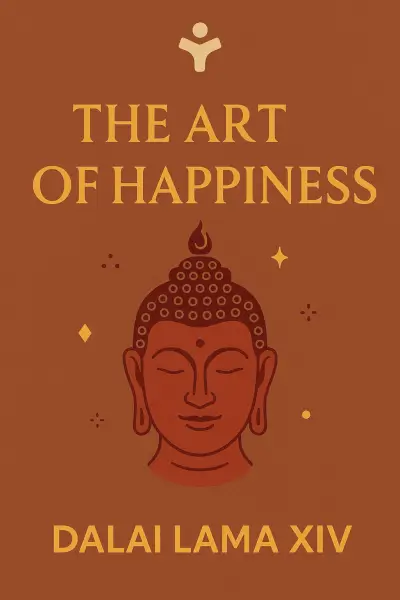
How to Apply The Art of Happiness: A Handbook for Living
A handbook for training your mind toward lasting joy, built from years of conversation between a Buddhist monk and a Western psychiatrist
About This Book
For years, publishers insisted a book about happiness written by a monk would never sell to a mainstream audience. Then this one spent two years on the New York Times bestseller list. Built from extended conversations in Arizona and India between the Dalai Lama and psychiatrist Howard Cutler, it argues that happiness is not luck or circumstance but a skill you train, the way you'd tone a muscle. Inside: why lottery winners and people paralyzed by accidents return to nearly the same mood within months, why loving someone can flip into resentment overnight, and why the person who irritates you most might be the rarest resource you get all year.About the Author
The Art of Happiness was written jointly by the Dalai Lama, the exiled spiritual and former political leader of Tibet, a Nobel Peace Prize laureate and one of the world's most senior Buddhist scholars, who has lived in exile in India since fleeing Tibet after the Chinese invasion; and Howard C. Cutler, an American psychiatrist who spent years meeting with him in Arizona and India conducting the extended conversations that form the core of this book. Cutler brought a Western clinical perspective, testing the Dalai Lama's claims against case histories drawn from his own psychiatric practice.
Biggest Takeaway
You'll stop waiting for the right conditions, the promotion, the relationship, the bigger house, before letting yourself feel content, because you'll see how quickly any of those highs fade back to baseline. You'll catch yourself treating minor slights as personal attacks less often, because you'll recognize the story you've added on top of the actual event. Conflicts with people you love will cost you less, because you'll have a way to separate durable care from the fragile kind that curdles into resentment. And the people who frustrate you most will start to feel less like obstacles and more like practice.
Key Insights from This Book
Explore the most important ideas and learn how to apply them in your life.
A one-word answer from the Dalai Lama that redefines what happiness even is
What lottery winners and paralysis survivors have in common a year later
The mother who searched every house in her village for something she couldn't find
What a newborn baby reveals about whether people are naturally selfish
The personals page that revealed how many people already had what they wanted
Why loving someone can flip into hatred overnight, according to the Dalai Lama
The woman in the middle seat that Cutler decided he hated for no reason
Why knowing something is bad for you rarely makes you stop doing it
Want More Actionable Insights?
Get the Mentorist app and turn knowledge from hundreds of books into daily actions.