Why some anxious people feel oddly relieved once they find something to worry about
Edward Hallowell kept running into the same puzzle across patients who looked, on paper, like success stories: people with stable jobs, good marriages, real achievements, who nonetheless described a persistent hum of dread, a sense that everything could collapse without warning. One patient, a minister with a loving marriage and a devoted congregation, put it memorably: it felt like being a cartoon character who has run off a cliff, legs still pumping, standing on nothing. Reassurance never helped. Neither did success. The dread simply moved to a new target the moment the old one resolved.
Hallowell's explanation is what he calls the startle response. Something ordinary jolts the mind out of whatever it had been focused on - a transition, a piece of news, even just finishing a task - and for a mind with ADD, that jolt can trigger something close to a small internal panic, because it doesn't immediately know where to land. Most people tolerate that instant of not-knowing without ever noticing it happened. But an ungrounded, unfocused moment can feel intolerable enough that the mind reaches for something to organize itself around instead, and worry does the job perfectly, because however painful it is, it is never formless. It gives you something specific to hold on to. Anxious rumination, in other words, can replace panic - not because anyone enjoys worrying, but because worry is more bearable than a few seconds of pure, disorganized dread.
This reframes what look like ordinary worriers as people doing something more specific: organizing around anxiety the way someone else might organize around a to-do list. It also explains why simply telling an anxious person there's nothing to worry about rarely works. The content of the worry was never really the point.
Instead of arguing with the worry's content, Hallowell has worked with patients to build a physical image of letting a worry go - picture leaning over the back of a small boat, releasing a heavy weight, and watching it sink out of sight for good rather than pulling it back up - and rehearsing that release deliberately, the way you'd rehearse any other skill, until it starts to feel real instead of merely comforting.
Start by noticing what happens right before a worry takes hold - a transition, an interruption, finishing a task - rather than treating the worry as if it arrived from nowhere. When you catch yourself ruminating, name the process instead of arguing with the content: ask what job this worry is doing for your mind right now, rather than trying to solve it. Practice tolerating a few genuinely unfocused seconds on purpose, resisting the pull to fill them with a fresh worry, and build that tolerance slowly. And rehearse a concrete image of letting go - something as simple as picturing a weight sinking out of sight for good - the same way you'd practice any other skill, expecting it to take many repetitions before it feels real rather than just comforting.
What You'll Achieve
The listener understands that some chronic anxiety functions as a way of avoiding a more intolerable moment of unfocused panic, rather than as evidence of real danger or personal failure, and gains a concrete practice for gradually loosening a worry habit that reassurance alone has never touched.
How to loosen the grip of chronic worry
*Notice what happens right before the worry starts*
Pay attention to whether anxious thoughts tend to follow a transition, an interruption, or the completion of a task, rather than assuming they come from nowhere.
*Name the process, not just the content*
When you catch yourself ruminating, ask what function the worry is serving in that moment instead of immediately trying to solve whatever you're worrying about.
*Practice tolerating a few unfocused seconds on purpose*
Deliberately sit with a brief moment of not knowing what to focus on next, without reaching for a worry to fill it, building tolerance gradually rather than all at once.
*Rehearse a concrete image of letting go*
Practice a specific mental picture of releasing a worry the way you'd practice any other skill, since insight alone rarely dissolves a habit this old on the first try.
Reflection Questions
- Does your worry ever seem to arrive right on schedule after a transition, rather than in response to an actual new problem?
- What would it feel like to sit for even five seconds without reaching for something to worry about?
- Is there a version of letting go you could rehearse deliberately, the way you'd practice any other skill?
Personalization Tips
- A successful professional who feels chronically insecure despite clear achievements might be organizing around worry rather than lacking real evidence of competence.
- Someone who always finds a new problem to fixate on the moment an old one resolves might be using anxiety, unconsciously, as a way to avoid a few seconds of unstructured calm.
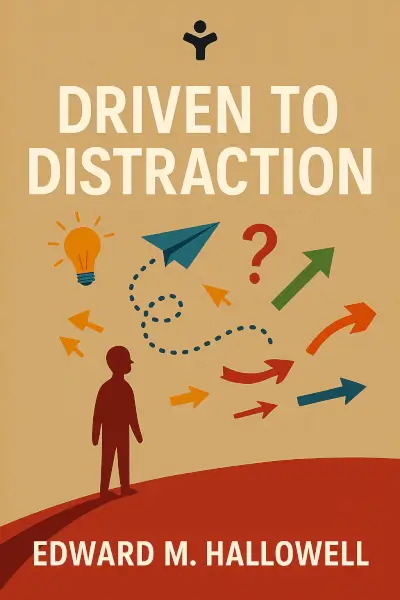
Driven to Distraction: Recognizing and Coping with Attention Deficit Disorder from Childhood Through Adulthood
Ready to Take Action?
Get the Mentorist app and turn insights like these into daily habits.