He could list everything on her mind except her
Why does it feel, some partners ask, like the person who loves you most doesn't actually know you're in the room?
Mary Rothman didn't wait to be asked why she and her husband, Sam, had come in fifteen minutes late for their first appointment. This man is making my life into a living hell, she said. No, he doesn't beat me or cheat on me, or drink, or gamble. He just behaves like an irresponsible little boy. She ran through the list without pausing: the middle-of-the-night decision to go flying because he was bored, plane tickets to Australia booked for the whole family without asking her, the constant channel-changing, the forgotten birthdays. But what I do mind, she said, is that he doesn't know that I exist.
Sam, an emergency-room physician who had since drifted through cartooning and freelance writing, didn't deny any of it. I know you have an inner life, he told her. I think I know what's on your mind most of the time, in fact. Oh, really, Mary said. Then tell me. Well, I'm on your mind for one thing, Sam offered - and Mary's response, that he was so wrapped up in himself he assumed he was the only thing on her mind, captured exactly the trap the two of them were stuck in.
Edward Hallowell's diagnosis was attention deficit disorder, and he draws a real line between that and simple narcissism. Sam wasn't ignoring Mary because he'd decided she didn't matter. He was being pulled away by distraction and by a hunger for stimulation strong enough to override whatever was directly in front of him, wife included. From the outside, the two conditions can look identical: a partner who seems entirely wrapped up in himself. But they call for different responses. Confronting narcissism means confronting selfishness. Confronting ADD means treating a real difference in how attention is regulated, while still holding the person accountable for the damage it's caused.
That second part matters as much as the diagnosis does. Understanding Sam's distraction as neurological, rather than as proof he didn't love her, genuinely helped Mary start looking for solutions instead of reasons to give up on the marriage. But naming the condition didn't erase years of feeling unheard, and Hallowell is insistent that the anger has to be acknowledged, not talked out of existence with a diagnosis. Medication helped Sam sustain focus long enough to actually be present.
But it was the slower work of both of them being heard, Mary's anger included, that let the marriage become something other than a nightly performance of being ignored.
Begin by getting an accurate diagnosis before you decide what your partner's distraction means, because whether it's selfishness or attention deficit disorder changes everything about the right response. Set aside real, dedicated time - not a snatched moment during a commercial break - to say plainly how the pattern actually shows up for each of you. Let the partner who isn't distracted have their anger heard in full; a diagnosis explains the cause, but it doesn't erase years of feeling unheard, and skipping that step will haunt you later. Build shared structure - lists, calendars, reminders you both use - rather than leaning on memory or promises. And protect time together the way you'd protect any appointment that mattered, because a mind that drifts easily needs the structure as much as the relationship needs the time.
What You'll Achieve
The listener learns to tell the difference between a partner who is neurologically distracted and one who is genuinely indifferent, understands why a diagnosis alone doesn't resolve accumulated resentment, and gains a practical sense of what actually rebuilds trust in a relationship affected by ADHD.
How couples can break the distraction cycle
*Get an accurate diagnosis before assigning a motive*
Rule out simple selfishness or disinterest by looking honestly at whether the pattern fits attention deficit disorder, since the right response depends entirely on which one it is.
*Say what's actually happening between you, out loud*
Set aside dedicated time, not a rushed exchange during a commercial break, to describe exactly how the pattern shows up for each of you.
*Let the non-distracted partner's anger be heard fully*
Don't let a diagnosis shortcut the process of acknowledging real hurt built up over years; naming the cause doesn't erase the damage it did.
*Build shared structure instead of relying on memory or promises*
Use shared lists, calendars, and reminders as a couple, since willpower alone rarely holds what an attention difference keeps dropping.
*Protect time together as deliberately as any appointment*
Schedule time to connect if that's what it takes, because a partner who drifts easily needs the structure as much as the relationship needs the time.
Reflection Questions
- Have you mistaken someone's distraction for a lack of caring, or your own distraction for something worse than it is?
- What would you need to hear from a partner, beyond an explanation, before you could let go of old resentment?
- What structure, however unromantic, might do more for your relationship than another heartfelt conversation?
Personalization Tips
- A partner who forgets anniversaries year after year despite genuinely loving their spouse may need calendar systems more than they need to feel guiltier.
- A couple stuck in a pattern of one person nagging and the other tuning out might do better negotiating a fixed daily check-in than relitigating the same argument nightly.
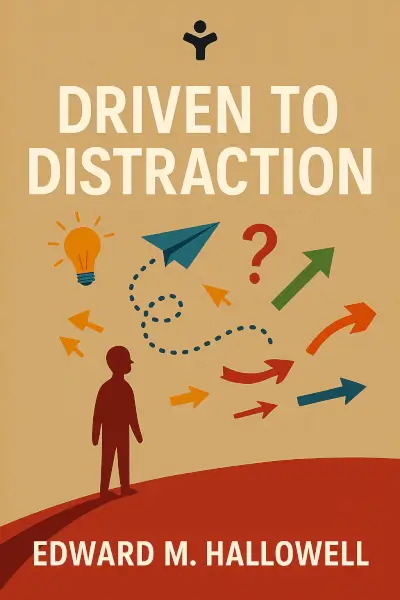
Driven to Distraction: Recognizing and Coping with Attention Deficit Disorder from Childhood Through Adulthood
Ready to Take Action?
Get the Mentorist app and turn insights like these into daily habits.