The radio guest who called ADD a hoax invented by drug companies
In the early nineteen nineties, Edward Hallowell found himself sitting across a table from a fellow psychiatrist named Peter Breggin in an NPR studio in Boston, being harangued for an entire hour. Breggin's position was blunt: attention deficit disorder was not a real condition. It was, he insisted, a diagnosis manufactured by pharmaceutical companies and eagerly adopted by parents who wanted an excuse rather than the discipline to raise their children properly. Hallowell pushed back with the emerging science: brain imaging studies, genetic studies, family studies, all pointing toward ADD as a biological condition rooted primarily in genetics, not in parenting.
At one point Hallowell asked him directly: are you saying every single case of what we now diagnose as ADD is simply bad behavior caused by bad parenting? Breggin's answer, for once, was short. Yes.
What makes the story worth telling isn't who won the argument. It's what happened afterward. When the show ended and Breggin discovered NPR wouldn't provide him a limo to the airport, Hallowell drove him to Logan himself. On that ride, two men who had just spent an hour publicly attacking each other's credibility had, in Hallowell's own account, a genuinely pleasant conversation. Breggin wasn't a villain. He was defending what he sincerely believed was right, using a framework - the moral model - that has shaped how societies understand behavior for centuries: if you fail, you simply haven't tried hard enough.
The trouble with the moral model, once you look at ADD through a biological lens, is that it misses the point entirely. Telling someone with ADD to try harder, Hallowell argues, is a bit like telling someone who is nearsighted to squint harder. Effort helps almost everything in life, but it cannot substitute for a lens that actually focuses light onto the retina - or, in this case, treatment that addresses how attention itself is regulated in the brain. The science that eventually settled the argument didn't come from either debater raising his voice louder. It came from imaging studies of the brain, family studies of inheritance, and years of outcome data comparing what happens when ADD goes undiagnosed against what happens once it's treated.
Start by trading the moral question for the biological one: instead of asking why someone won't just try harder, ask what is actually happening inside their brain, because treating the pattern as neurological rather than a character flaw is what opens the door to real solutions. Look for a lifelong, familial thread - has this shown up since childhood, and does it run in the family - since genetics is the strongest known cause. Hold two things at once: environment can make symptoms worse without ever being the root cause, so you can fix a chaotic household without using it to explain away the disorder. And before you settle on either extreme, get an actual evaluation from someone trained to tell the difference, rather than deciding the matter yourself over dinner.
What You'll Achieve
The listener stops treating distractibility and impulsivity as evidence of bad character in themselves or others, and starts asking what neurological and structural factors are actually at play, which opens the door to effective treatment instead of endless self-blame or blame of others.
How to swap blame for biology
*Trade the moral question for the biological one*
Instead of asking why someone won't try harder, ask what is actually happening in their brain, since treating distractibility as a neurological pattern rather than a character flaw opens the door to real solutions.
*Check for a lifelong, familial thread*
Look for whether distractibility, impulsivity, or restlessness have shown up since childhood and whether relatives share the pattern, because genetics is the primary known cause of ADD.
*Separate what genetics causes from what environment worsens*
Accept that a chaotic household or harsh parenting can intensify symptoms without ever being the root cause, so you can address parenting or environment without using it to explain away the disorder itself.
*Get an evaluation instead of picking a side*
Don't diagnose yourself and don't dismiss the possibility outright; a trained clinician can rule out other explanations and confirm whether the pattern genuinely fits ADD.
Reflection Questions
- Whose behavior have you privately judged as laziness or carelessness that might actually reflect an attention difference?
- What would change in a difficult relationship if you assumed the other person's brain works differently rather than that they don't care?
- Have you ever confused environment making something worse with environment actually causing it?
Personalization Tips
- A manager who assumes a chronically late employee is disrespectful might instead ask whether attention regulation, not attitude, is the real issue.
- A parent tempted to tell a forgetful teenager to simply concentrate harder might instead ask what structure could help, the way glasses help someone who is nearsighted.
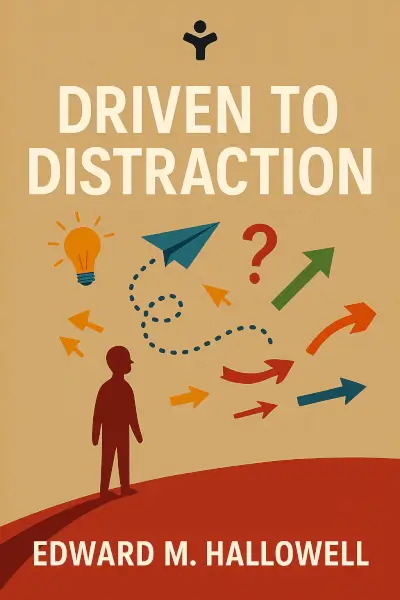
Driven to Distraction: Recognizing and Coping with Attention Deficit Disorder from Childhood Through Adulthood
Ready to Take Action?
Get the Mentorist app and turn insights like these into daily habits.