The stranger at a riot who called a man his own worst enemy
On the New Haven Green in the late 1960s, Yusuf al-Falah stood watching police fire tear gas into a crowd of black protesters. Beside him stood a black man, watching with an unreadable stillness. Al-Falah, an Arab who felt he understood oppression from the inside, offered what he thought was solidarity: so the oppressed are fighting back.
On both sides, the man replied.
Al-Falah didn't understand. He pushed back, defending his right to fight for justice given everything his people had suffered. The man, a philosophy professor named Ben Arrig, told him he pitied him, because you have become your own enemy, Arrig said.
Over three years, Arrig taught al-Falah to ask a different set of questions whenever he found himself locked in blame toward someone, an Israeli, a rival within his own movement, anyone. What are this person's burdens, trials, and pains that I've never considered? How am I, or a group I belong to, adding to them? In what other ways have I mistreated or neglected them? And what am I actually feeling I should do about it?
The questions did something specific: they shifted al-Falah from defending his own suffering to noticing someone else's, which made room for feelings he hadn't had access to before. Years later, back in Bethlehem, he went looking for Mordechai Lavon, the blind man he'd once refused to help. He found an old beggar woman instead, who told him Lavon had died alone in an alley, his body undiscovered for three days until the smell gave him away.
Al-Falah felt the loss more sharply than he expected. Then the woman asked him for money. He noticed himself stiffening automatically, refusing even now to see her, proof, he says, of how stubbornly the old pattern holds on. He caught it, took out his wallet, asked her name, and gave her everything he had. For Mordechai, he said.
The questions alone hadn't fixed anything. What mattered was that he then did something with what they showed him. Arrig had a favorite word for that last part, al-Falah says: action. A question you never act on is just a more sophisticated way of staying exactly where you were.
Before you defend your position in your next disagreement, pause and ask what burdens the other person might be carrying that you've never bothered to find out about. Ask honestly whether you, or some group you belong to, might be adding to those burdens in ways too small or too convenient to notice. Check which of your own excuses might be distorting what you think you already know about them, since the more certain you feel, the more worth double-checking that certainty becomes. And once you've asked, don't stop there: name the one thing you now feel you should do for this person, and go do it soon, because a good question you never act on is just a more comfortable place to stay stuck.
What You'll Achieve
You develop a habit of asking about the other person's hidden burdens before defending your own position, which loosens certainty enough to notice options for action that blame had been hiding from you.
Ask what you have never asked about them
Ask what burdens this person is carrying.
Pause before defending your position and consider what trials or pains they might be facing that you know nothing about.
Ask how you might be adding to those burdens.
Consider honestly whether you, or a group you belong to, are contributing to their difficulty in ways too small or convenient to notice.
Check which of your own boxes might be distorting the picture.
The more certain you feel about someone, the more worth double-checking that certainty, since justification tends to hide behind confidence.
Name what you now feel you should do, and go do it.
A question you never act on is just a more comfortable place to stay stuck; find the smallest next action and take it.
Reflection Questions
- What do you actually know about the burdens the person you're in conflict with is carrying right now?
- Where might you, or a group you belong to, be adding to someone else's difficulty without realizing it?
- Have you ever asked yourself a genuinely humbling question and then failed to act on the answer? What stopped you?
Personalization Tips
- Someone realizes they've never once asked what pressure their office rival is actually under before judging their behavior.
- A person estranged from a relative asks, for the first time, what that relative's own life has been like from the inside.
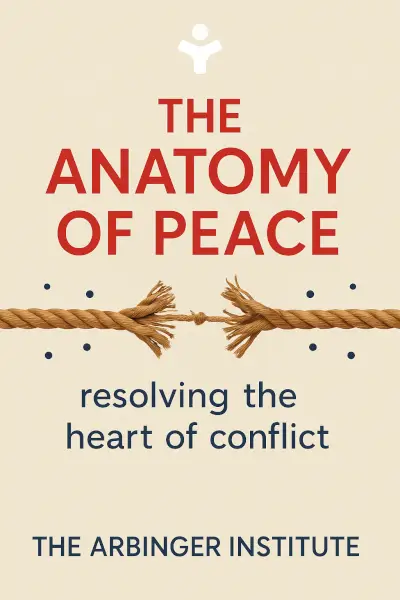
The Anatomy of Peace: Resolving the Heart of Conflict
Ready to Take Action?
Get the Mentorist app and turn insights like these into daily habits.