The blind beggar who taught a professor how wars really start
Yusuf al-Falah spent years of his boyhood working the streets of Bethlehem, and a blind Jewish man named Mordechai Lavon worked the same streets a few feet away. They knew each other's voices. They had never once spoken.
One day Lavon stumbled, and his coin purse burst open across the pavement. Al-Falah felt something immediate and specific: a desire to help him up and gather his coins. He calls it a sense, and he says it's the same sense most of us feel dozens of times a week, to apologize, to share information a coworker needs, to help a struggling spouse, and mostly ignore.
Al-Falah ignored it too. He turned and walked away.
What happened next, he says, is the part worth paying attention to. Within moments, Mordechai Lavon stopped being a person to him and became a Zionist threat, a bigot, someone with no right to be there. Al-Falah started feeling victimized, angry, bitter, and, crucially, justified in all of it. He calls this self-betrayal: the choice to act against a sense of what's right in a given moment, toward a particular person. And he argues that self-betrayal is the exact hinge on which a heart swings from peace to war.
The order matters here. Al-Falah wasn't bitter about the Israelis and therefore unable to help Lavon. He wanted to help first, then betrayed that desire, and only then did the bitterness arrive, sized to fit the crime he needed to excuse. His childhood tragedy, his father killed in an earlier massacre, was real and terrible, but it didn't cause the feelings that flooded him on that street corner. Something he did caused them. The hardship became the excuse only once he needed one.
This is uncomfortable because it removes the alibi of circumstance. It also, al-Falah insists, restores something more valuable: the possibility of change that doesn't depend on Mordechai Lavon, or anyone like him, ever being different. If the war started with a choice, it can end with one too.
Pay attention today to the small, fleeting pulls you feel toward someone: the urge to help with something, share information that would make their day easier, or apologize before it's convenient. When you feel one and are tempted to walk past it, notice what happens in your mind the moment you do. If the person suddenly seems more selfish or more deserving of blame than they did sixty seconds earlier, that shift is the evidence, not the truth about them. Trace any sudden bitterness back to the moment it started rather than to the circumstances you'll want to blame instead. And where you can, go back and do the smaller, later, awkward version of the thing you skipped, because honoring the original sense matters more than getting the timing right.
What You'll Achieve
You learn to catch the exact moment a person turns into a justification-object in your mind, so that instead of feeling permanently stuck with your resentment, you recognize it as the product of a choice you can also unmake.
Catch the moment you turn away
Notice the flicker of a sense to help.
When you feel a fleeting pull to do something kind, pick up dropped coins, share a hard truth, apologize, pay attention before you talk yourself out of it.
Watch what happens the instant you ignore that pull.
If the other person suddenly seems more selfish or more deserving of blame than they did a minute before, that shift is the clue, not the truth about them.
Trace the feeling back to its source.
Before blaming your mood on circumstances, check whether it started the moment you chose not to act on a sense you had.
Go back and do the smaller version of the thing you skipped.
Even late, even awkwardly, honoring the sense matters more than performing an ideal outcome at the ideal time.
Reflection Questions
- When was the last time you felt a small pull to help or apologize and ignored it? What did you start telling yourself about the other person right afterward?
- Do you tend to blame your bad feelings on circumstances that were already true before you started feeling that way?
- What would it cost you to go back now and do the smaller, delayed version of what you skipped?
Personalization Tips
- Someone ignores a coworker's obvious struggle, then spends the afternoon privately deciding the coworker is lazy and difficult.
- A person skips calling an aging parent back, then rehearses a list of reasons the parent is too needy anyway.
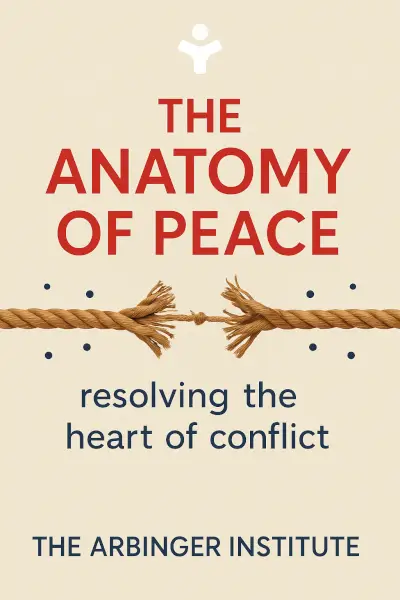
The Anatomy of Peace: Resolving the Heart of Conflict
Ready to Take Action?
Get the Mentorist app and turn insights like these into daily habits.