Why Ending Violence Isn’t Enough: Embracing Both Negative and Positive Peace
When students debate peace in social studies class, their first answer is often, 'peace means no more war or fights.' The teacher nods, then asks, 'Imagine our school had no fights, but some students still felt left out, their voices ignored, their needs dismissed. Is that really peace?' Silence falls across the room. Suddenly, someone remembers how some students eat lunch alone or can't join sports because of fees. The class begins to see that peace isn't just the absence of violence. It's about fairness, safety, and everyone having a sense of belonging and opportunity.
This more complete vision matches what social psychologists found in societies long after wars end. If communities settle for 'negative peace'—just ending violence—hidden problems fester. People may lack justice, voice, or security. These undercurrents, if ignored, can spark new conflicts later. Real, sustainable peace—called 'positive peace'—depends on meeting basic human needs, building systems of trust, and supporting inclusion. When community leaders, schools, or governments look beyond the silence of guns and invest in dignity, economic fairness, and social protection, the foundation for long-term harmony is set.
Behavioral science supports this: people are far less likely to support aggression or exclusion when they trust those around them and believe their lives can improve. But it takes conscious effort to build beyond the minimum, especially in the wake of longstanding hostility. By identifying what true 'positive peace' means in concrete terms and creating spaces for cooperative problem-solving, groups can raise expectations and standards for how they treat each other.
Peace is more than the sound of silence after violence—it’s the trust, opportunity, and shared rights that make that silence worth having.
Take a few minutes to consider whether peace in your environment simply means 'nobody’s fighting,' or whether some lingering injustices remain overlooked, like isolation, discrimination, or economic gaps. Map all the different groups and individuals who play a role in shaping your daily climate—not just the obvious leaders, but teachers, parents, or marginalized peers. Now, seek places where collaboration could break old boundaries, even through small joint projects or dialogues. Finally, write out your own practical vision for a lasting peace, one that includes dignity, opportunity, and inclusion for all involved. Challenge yourself to see beyond quiet; try making at least one step from your list, starting today.
What You'll Achieve
Greater awareness of the deeper foundations of peace, increased motivation to address hidden injustices, and the ability to design or advocate for systems that foster long-term inclusion and dignity.
Go Beyond Stopping the Fight—Build Lasting Systems for Flourishing
List sources of hidden injustice.
Identify issues like discrimination, poverty, or exclusion still present when overt conflict ends. Consider whose needs remain unmet even after violence stops.
Map relationships beyond the state level.
Draw a diagram including local communities, organizations, and individuals who shape peace or conflict, not just national leaders.
Spot opportunities for cooperation.
Note where different groups might collaborate for shared resources, education, or safety, even if they were once adversaries.
Define peace for your community.
Write a concrete paragraph outlining how life should look in a truly peaceful environment—not just without violence, but with dignity and access for all.
Reflection Questions
- What problems persist in my community despite the absence of open conflict?
- Who might still feel left behind or excluded, and why?
- What does true peace look like here—not just for me, but for everyone involved?
- Where do I see unused opportunities for building cooperation?
Personalization Tips
- A school introduces a peer mediation program alongside anti-bullying policies, ensuring students feel safe and included, not just unhurt.
- A workplace goes beyond ‘zero harassment’ by building mentorships and celebrating diversity, so all feel valued.
- Community leaders don’t just end a protest—they host regular open forums to address systemic inequalities.
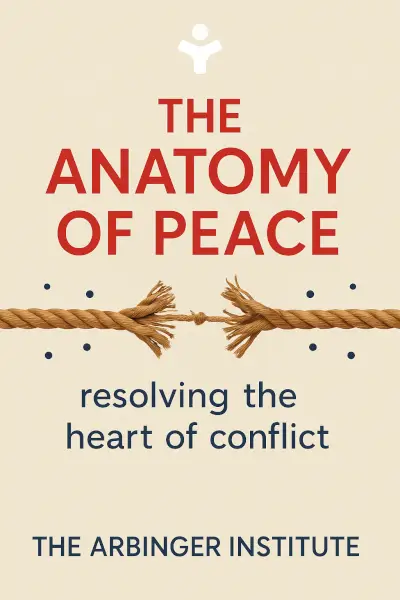
The Anatomy of Peace: Resolving the Heart of Conflict
Ready to Take Action?
Get the Mentorist app and turn insights like these into daily habits.