Self-love is a practice, not a mood, so train your talk and your calendar
Confidence rarely arrives as a lightning bolt. It grows like a plant—daily light, water, and a little pruning. Light is the way you speak to yourself when nobody’s around. Water is small actions that prove you’re on your side. Pruning is cutting away the cheap laughs that cost you respect. When your calendar and your language agree, something shifts. You feel it while washing dishes, humming, not rushing.
Start tiny. Go to bed on time three nights in a row or take a real lunch without your inbox. Choose one phrase to retire, the one that slips out when you’re tired. Replace it with an honest upgrade you can say without rolling your eyes. Tape it to your laptop. At night, write two lines—what you did for you and where you spoke kindly. You’re training your brain to see what’s already getting better.
Micro-anecdote: A project manager replaced “I’m a mess” with “I plan, then adapt.” She began a 15-minute walk after lunch. In a week her team noticed she interrupted less in meetings. She hadn’t changed her title, just her talk and one habit.
This is self-compassion plus behavior design. Self-compassion isn’t letting yourself off the hook, it’s talking to yourself like someone you’re responsible for helping. Tiny habits create reliable wins that upgrade identity. And identity-based change tends to last, because “I’m the kind of person who…” drives behavior automatically. Put respect in your day, and respect shows up in your day.
Pick one small daily action that would make Future You grateful, then pick one self-insult you’ll retire and write the upgraded line where you’ll see it. For the next seven nights, spend one minute logging the action you kept and the moment you used kinder talk, even if it felt awkward. Ask a friend to nudge you if you fall back into cheap self-deprecation, and keep the humor without the harm. Let these small loops stack until you feel the difference. Start your loop tonight before bed.
What You'll Achieve
Internally, reduce self-criticism and increase self-trust. Externally, maintain one daily self-respect habit for 7–14 days and notice improved focus or calmer interactions.
Build a daily self-respect loop
Set one self-respect action
Choose a small daily behavior that signals worth—go to bed on time, take a real lunch, or move your body for 15 minutes.
Replace one self-insult
Write the phrase you say most (“I’m such an idiot”) and swap it with one truthful upgrade (“I’m learning fast”). Put it where you’ll see it.
Collect proof nightly
Each evening, jot two lines: the action you took and where you used the new phrase. Evidence builds identity.
Ban cheap self-deprecation
Ask a friend to call you out when a joke is actually a jab. Humor stays, self-erosion goes.
Reflection Questions
- Which small daily action would signal respect to me right now?
- What self-insult do I default to, and what truthful upgrade can replace it?
- Who can call me out gently when I slip into self-deprecation?
- What changes when my calendar and my language match?
Personalization Tips
- Work: Block a “focus hour” and decline one avoidable meeting politely.
- Health: Prep a water bottle each night and take a short walk after lunch.
- Family: Replace “bad mom/dad” jokes with a concrete win from the day.
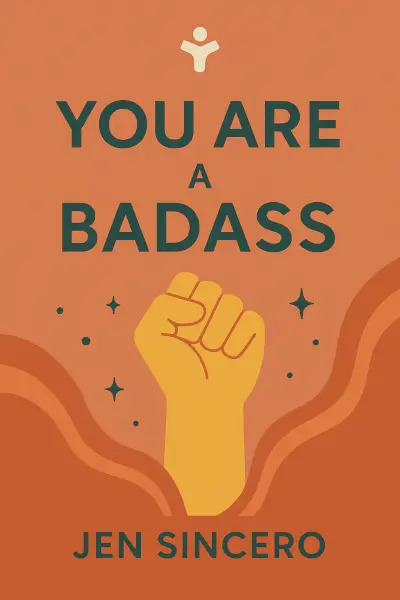
You Are a Badass: How to Stop Doubting Your Greatness and Start Living an Awesome Life
Ready to Take Action?
Get the Mentorist app and turn insights like these into daily habits.