Why Fear Is Your Secret Guide to Growth
You’re standing at the edge of a crowded auditorium, heart racing as the lights dim and the microphone glints on stage. Your palms sweat against the crisp note cards in your hand. You’ve rehearsed this talk a dozen times, but now every internal voice screams you’ll freeze. Yet something in you remembers a different story: that fear isn’t the enemy but an alert, pointing exactly where change is waiting.
So you pause. You feel the warmth rising in your chest and draw in a deliberate breath. You name it, ‘anxiety,’ as clearly as if turning on a light in a dark room. Suddenly it seems less like an overwhelming force and more like a passing guest.
You let the breath travel all the way down, and you feel the tension soften—just a little. You notice a dull hum from the sound system and the faint scent of perfume drifting through the air. In that moment, you glimpse a space beyond panic, where you could actually choose your next move.
By leaning into fear rather than fleeing, you discover an ancient principle from psychology and behavioral science: naming emotions (“affect labeling”) engages the brain’s prefrontal cortex, dialing down the amygdala’s alarm system. What feels like a wall suddenly becomes a doorway.
This isn’t a one-and-done trick but a practice. Each time you pause, name, breathe, and observe, you’re rewiring your fear response from autopilot to conscious choice. Over time, that choice becomes your new instinct.
You can treat fear like a curious signal. The next time your chest tightens, pause for a moment and name the feeling—’anxiety,’ ‘doubt,’ or whatever it is—then take two full breaths in that state. Notice any subtle shift—in your body, thoughts, or the room around you—before proceeding. This simple pause-and-label sequence turns fear from a runaway wave into a manageable signal. Give it a try the next time your heart races.
What You'll Achieve
You will internalize a calm, observing mindset that transforms automatic fight-or-flight panic into deliberate action, leading to improved confidence and decision-making under stress. Externally, you’ll respond more steadily in presentations, conflicts, and high-pressure moments.
Lean into the discomfort
Pause at the first twinge.
The next time you notice a flutter of fear in your chest, stop whatever you’re doing and take a deep breath. Catch that moment so you don’t automatically back away.
Name your fear.
Silently label what you’re feeling—’anxiety,’ ’uncertainty,’ or ’shame.’ Giving it a name reduces its power and shifts your relationship with it.
Stay present two more breaths.
Hold your attention on your breath for at least two full cycles. Let the fear come into your awareness without judgment, as if you’re watching a wave roll in and out.
Note what shifts.
After your two breaths, check in: has the intensity eased? Can you see a new detail—maybe a temperature change or a thought pattern? Observing change builds courage.
Reflection Questions
- What recent situation triggered an intense fear response and how did you react?
- How might naming your fear change your next experience of anxiety?
- What new details emerge when you stay present with fear for just two breaths?
- How could this practice alter your approach to other emotions like anger or shame?
Personalization Tips
- At work, when your boss previews a new project you worry about, pause and name ‘performance anxiety’ before reacting.
- In a family conflict, notice the first pang of defensiveness, take two quiet breaths, and observe what softens.
- Before a big test, catch your stomach flip, label ‘exam jitters,’ and breathe to discover if you can calm your nerves.
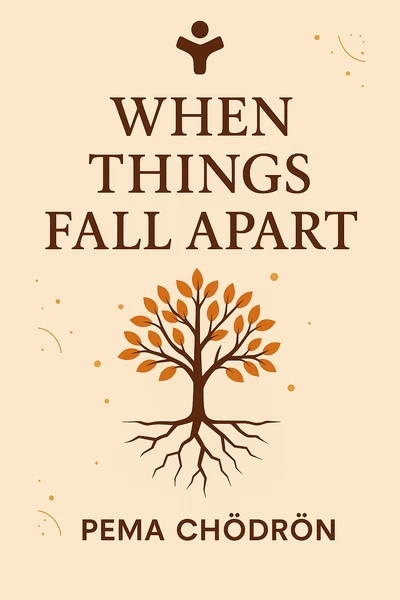
When Things Fall Apart: Heart Advice for Difficult Times
Ready to Take Action?
Get the Mentorist app and turn insights like these into daily habits.