Expose the loop your anxiety hides inside to take back control
You notice the tightness first, the way your shoulders creep toward your ears when a vague subject line lands in your inbox. Before you know it, your thumb is on autopilot, refreshing messages, then the news, then the weather, anything to outrun the jitter. The coffee on your desk goes cold while the clock sprints. You tell yourself it’s preparation. It’s not. It’s a loop.
Take a pen and write one line from today: Trigger. Behavior. Result. The trigger is easy, a ping and a thought, “What if there’s bad news?” The behavior is familiar, you search for certainty by checking again. The result is subtle but real, a three-second exhale. Then it boomerangs into more tension. Map it once more from a different moment. You’ll see the same shape, like tracing the outline of a key you’ve been using in the dark.
A client once described how she would open the fridge every time she felt behind, take two bites standing up, then feel both soothed and stuck. She drew the loop on a sticky note and kept it by the fridge. After a week, the sticky note did more to change her evenings than any motivational quote. I might be wrong, but seeing cause and effect beats willpower when the day gets noisy.
Here’s why this simple map works. Your brain learns through reward-based loops: a trigger cues a behavior, and any relief—however brief—teaches your brain to repeat it. Mapping makes the relief visible and the cost obvious. You’re not shaming yourself, you’re revealing how a helpful survival system got trained by modern life. That awareness is the first gear of change, and it’s enough to start loosening the loop.
Before dinner, grab a scrap of paper and catch one fresh example. Name the specific trigger, then note what you did next and exactly what you got from it, even if it was only a tiny exhale. Circle that payoff so your brain understands why it returned to the behavior. Do a second quick map from another moment today to spot the pattern. Keep the two mini-maps somewhere visible tonight, like next to the sink or on your laptop. Let that little triangle of trigger, behavior, result remind you that you’re learning how your system works. Give it a try tonight.
What You'll Achieve
Internally, build nonjudgmental awareness and a sense of agency by seeing your loops clearly. Externally, reduce time lost to worry-spirals and avoidance by recognizing and interrupting predictable patterns.
Map one loop before dinner tonight
Name one fresh trigger
Pick something from today that set you on edge (an email, a look, a thought). Keep it concrete and recent so your memory is vivid.
Write trigger–behavior–result
Under the trigger, note what you did next (worry, scroll, snack, avoid) and what you got from it in the moment (brief relief, distraction, more anxiety).
Circle the payoff you actually felt
Be honest about the short-term reward. Even a tiny drop in tension counts. Seeing the payoff explains why your brain repeats it.
Repeat for one more mini-loop
Do a second quick map from the same day. Patterns jump out after two examples, and momentum builds.
Reflection Questions
- When I feel relief in the moment, what cost shows up an hour later?
- Which two triggers keep showing up this week?
- What emotion am I trying to avoid when I open my phone or the fridge?
- Where can I place a visual reminder to map the next loop quickly?
Personalization Tips
- Work: After a calendar change, you check Slack repeatedly and delay starting the deck; you feel brief relief but more time pressure.
- Parenting: Your child ignores a request, you lecture, they withdraw; you feel momentary control but more distance later.
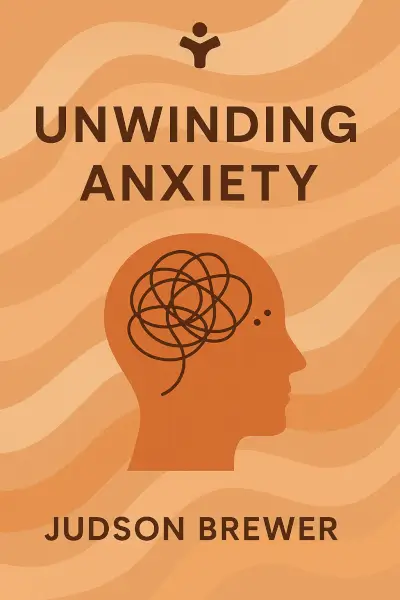
Unwinding Anxiety: New Science Shows How to Break the Cycles of Worry and Fear to Heal Your Min
Ready to Take Action?
Get the Mentorist app and turn insights like these into daily habits.