Why memory champions rely on journey routes for massive retention
When Kevin Horsley took himself to the 1999 Memory World Championships, he didn’t rely on luck—he used a 10,000-digit journey drilled into his mind. The journey, or loci method, dates back to ancient Greece. Cicero credited his mentor Quintilian with teaching orators to ‘see’ arguments in a grand hall’s niches. Modern MRI studies reveal that seasoned memory experts light up their hippocampi—the brain’s spatial-mapping center—when navigating these mental palaces.
Dr Yip Swee Chooi memorized the entire 1,774-page Oxford English Dictionary by chaining multiple loci across familiar cities. Each street corner and landmark became a container for thousands of words. He reports that his first palace held 3,000 entries, and once in place, recall was near-instantaneous.
This technique leverages our evolutionary talent for spatial navigation. Studies of London taxi drivers show that learning “the Knowledge” enlarges the posterior hippocampus. By converting abstract data into spatial markers, you tap into a system perfectly honed over millennia.
To scale it, you don’t need special genes—just a commitment to segmenting data into manageable chunks, mapping them onto well-rehearsed routes, and practicing consistently. The reward is linear: the more journeys you build, the more data you can carry at the speed of thought.
Begin by choosing a route you know like the back of your hand—your commute or morning jog. List ten to twenty distinct stops. Then tag each landmark with a vivid image representing a block of data you need. Walk that route in your mind for ten minutes today, and revisit it tomorrow in reverse. You’ll notice each detail lock into place.
What You'll Achieve
You’ll internalize massive datasets into an organized spatial framework, enabling high-speed recall of hundreds or thousands of items with minimal mental effort.
Scale your loci with extended routes
Pick a long, familiar route
Choose a commute, campus loop, or hiking trail you can mentally traverse without pause.
Segment into stops
Divide the path into 10–20 clear landmarks—turns, statues, storefronts, corners—so each holds a data chunk.
Assign large data blocks
Break your massive dataset into 10–20 groups, and place each group’s image at the corresponding landmark.
Batch practice sessions
Walk the route mentally for ten minutes, then return next day to build neural reinforcement in segments.
Incorporate bi-directional recall
Practice recalling in reverse order to ensure each landmark-data link is robust in both directions.
Reflection Questions
- How extensive is the route I know best?
- What potential landmarks could blur together and how can I distinguish them?
- Which data block should I tackle first?
- How will I chunk my dataset into memorable segments?
- What practice schedule will ensure lasting retention?
Personalization Tips
- A medical student maps each organ system onto a campus circle to learn anatomy in sequence.
- A linguist memorizes 500 new vocabulary words by assigning 25 words to each of 20 city blocks on their evening walk.
- A pilot commits emergency checklists to memory by associating each step with airport waypoints on the taxiway.
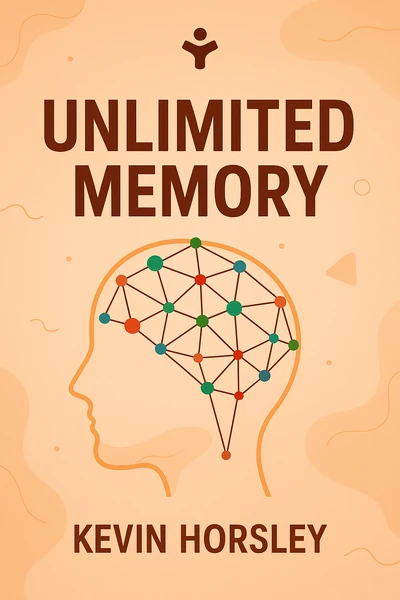
Unlimited Memory: How to Use Advanced Learning Strategies to Learn Faster, Remember More and be More Productive
Ready to Take Action?
Get the Mentorist app and turn insights like these into daily habits.