Your Brain Always Tells Stories—even When You’re Asleep
Research on the brain’s default mode network reveals that when we aren’t focused on a specific task, our minds drift into storytelling mode. Neuroscientists have traced this activity to a network of regions—including the medial prefrontal cortex and posterior cingulate—that hum along whenever we daydream or rehearse social scenarios. In one study, participants scanned waiting for a reward showed the same neural signature as those recalling autobiographical memories. Even during sleep, the brain weaves narratives in REM cycles.
This storytelling impulse once served survival, helping our ancestors rehearse possible threats or social interactions. Today, it keeps us planning schedules, mulling over conversations, and conjuring worst-case scenarios. The problem arises when these stories dominate our attention so fully that we forget we’re merely replaying mental tapes.
Cultivating awareness of your mind in default mode can interrupt unhelpful loops. By labeling recurring narratives—“that’s the ‘I’ll never be ready’ tape”—you bring the prefrontal cortex back online. A simple breath and sensory check reins in the storytelling network and reactivates the brain’s attentional systems. Over time, this practice reduces the grip of rumination and frees mental bandwidth for present tasks.
Next time you catch your brain on autopilot—maybe in line at the coffee shop—notice the story brewing. Give it a label, like “dreading the presentation,” then pause, inhale slowly, and scan the room for colors or textures. You’ll be surprised how a simple title and sensory reset can snap you out of endless mental loops and restore clear focus. Try it at least once today.
What You'll Achieve
You’ll interrupt runaway mental narratives, reducing rumination and freeing your mind for creative problem-solving. Externally, you’ll be more present, attentive and less burdened by intrusive thoughts.
Notice When Your Mind Goes on Autopilot
Tune into idle moments
Notice when you’re waiting in line or on a familiar drive. Pay attention to what your mind is saying in those gaps.
Label your story
As thoughts drift, give them a title like “worried about money” or “rehearsing that meeting.” This separates you from the narrative.
Pause and refocus
Take a deep breath, notice your surroundings and gently shift your attention to a grounding detail—crowd noise, bird calls or the floor beneath you.
Reflection Questions
- What story does your mind tell most often when you’re idle?
- How does labeling that story change your sense of control?
- Which grounding detail do you turn to first?
- How will you practice this when your mind is racing?
- What benefit do you expect from reducing mental chatter?
Personalization Tips
- At red lights, observe the plot your mind creates instead of instantly reaching for your phone.
- In the shower, catch internal chatter about last night’s argument and label it before letting it go.
- When your mind replays a past mistake at the office, stop, take a breath, and scan the ceiling tiles instead.
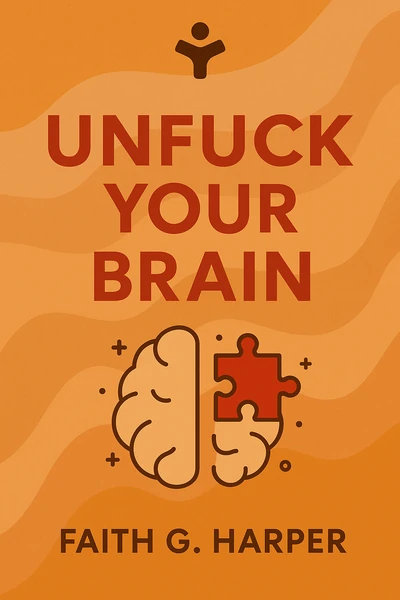
Unfuck Your Brain: Using Science to Get Over Anxiety, Depression, Anger, Freak-Outs, and Triggers
Ready to Take Action?
Get the Mentorist app and turn insights like these into daily habits.