Stop Running from Pain and Transform Your Trades
Pain is biology’s red flag—an alarm meant to trigger fight or flight. Yet in trading, fear-driven fight or flight usually ends in disaster: trades ignored, stops violated, profits left behind. Neuroscience tells us that fear hijacks the prefrontal cortex—the seat of rational thought—narrowing our focus onto the threat and shutting out alternative paths.
Classic experiments in affective psychology show how threat biases perception. Subjects primed with fear words see neutral shapes as threatening; con artists exploit this by conjuring anxiety before a pitch. In trading, that translates to seeing every retracement as a looming train wreck, even if the bigger trend is your friend.
But research also reveals an escape hatch. Simply acknowledging and naming your fear reengages rational circuits and reduces the amygdala’s hijack—this is called exposure therapy in PTSD treatment. When anxious traders pause to label their dread—‘this is just fear of being wrong’—they unlock the capacity to choose action over avoidance.
By co-opting fear as data rather than danger, you turn a paralyzing force into a trading ally. You transform that charge from an arrest warrant into a permission slip: the market just reminded you to double-check your edge. And suddenly, fear becomes the fuel for cleaner, clearer decisions.
You’ll start by tuning in to that knot in your gut the moment it appears. Name it clearly—fear of loss, fear of missing out, fear of being wrong—and you’ll feel the tension ease. Then treat it as a neutral dashboard light signaling you’ve entered a critical zone. Take a breath, review your edge, and choose your next move deliberately. In doing so, you’ll build trust in yourself rather than runaway from fear.
What You'll Achieve
You will transform panic into clarity, relying on fear signals to pause and reaffirm your edge rather than panic-sell. This breeds calm discipline and fewer reactive mistakes.
Use Fear as Your Trading Ally
Notice your fear triggers
During each trade, pause at the first twinge of anxiety—record exactly what price action or thought set it off.
Label the emotion
Name your feeling: ‘fear of loss,’ ‘fear of missing out,’ etc. Labeling disengages the defense circuits and defuses the charge.
Reframe the signal
Treat each twinge as a harmless indicator—like a flashing warning light—letting you observe rather than react. Breathe, note the edge, then act.
Reflection Questions
- What specific market move triggers my deepest fear?
- How does labeling that fear change my impulse to react?
- What edge reminder can I arrange to follow each flash of anxiety?
- Where else can this fear-label technique improve my decisions?
- How might this reframe shift my relationship with risk?
Personalization Tips
- A chef fearing criticism uses each negative review to refine a single recipe rather than abandon the menu.
- An athlete fearing error treats a missed goal as a data point to adjust their stance, not a personal failure.
- A manager fearing rejection lists the worst outcome of giving feedback, then focuses on the upside for team growth.
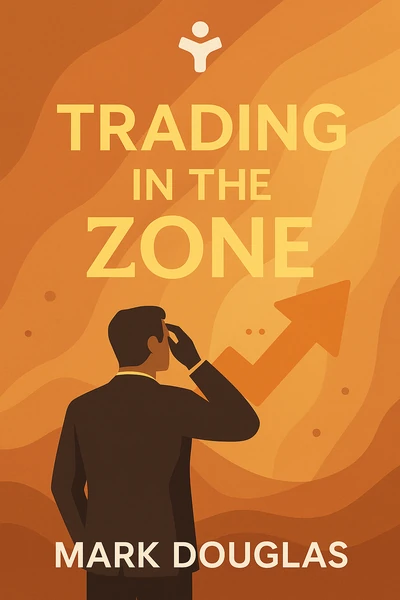
Trading in the Zone: Master the Market with Confidence, Discipline, and a Winning Attitude
Ready to Take Action?
Get the Mentorist app and turn insights like these into daily habits.