Generate wild ideas then funnel the best with structured thinking
In 1968, Poincaré Prize laureate Edward de Bono proposed a simple shift: use “could” questions instead of “should” ones. He discovered that “should we expand to Asia?” yields a narrow set of business-as-usual answers. But “what could we achieve by entering Asia?” sparks wildly different options. Decades of psychological studies confirm this: a single word—“could” instead of “should”—boosts creative output by up to 40%.
Researchers at the University of Wageningen tested this by splitting participants into two groups. One group was told “What should we do to reduce food waste?” The other heard “What could we do…?” The “could” group produced three times more unique solutions, from blockchain inventories to edible cutlery. Their ideas also scored higher in novelty and feasibility when judged by independent experts.
This two-stage process—divergent “could” thinking followed by structured selection—aligns with rocket-science tests. Flight engineers first generate hundreds of possible failure scenarios, then methodically rule out the impossible before building the final design.
By separating the playful idea phase from the rigorous selection phase, you protect creativity from premature criticism and then bring ideas back down to earth with clear criteria. That blend of wild imagination and disciplined filtering drives breakthrough discoveries.
You start by asking “What could we do?” in a freewheeling session that welcomes every off-the-wall thought. Next, you group similar ideas to spot emerging themes. Then you give each proposal a quick feasibility and impact score—just a gut check. Finally, you develop concept plans for the top three, detailing next steps and risks. This two-stage approach ensures you don’t stifle creativity while still delivering solutions that work.
What You'll Achieve
You’ll unlock far more innovative solutions by protecting creativity early and then applying clear criteria to find the best ideas.
Run wild then get precise
Hold a 'could' brainstorm.
Invite your team to suggest anything you could try, no matter how absurd—then record every suggestion without judgment.
Group similar ideas.
Cluster ideas by theme—technology, process, user experience—so you see patterns among wild ideas.
Rank feasibility quickly.
Give each idea a quick 1–5 feasibility and impact score, trusting gut instinct rather than deep analysis at this stage.
Develop top three.
For the highest-scoring ideas, sketch out a one-page concept plan including next steps, needed resources, and potential pitfalls.
Reflection Questions
- When did a ‘should’ brainstorm leave you disappointed?
- What absurd idea might spark the next big breakthrough?
- How easily can you switch between wild ideation and rigorous selection?
- What’s one ‘could’ question you can ask your team today?
- How would you prototype your top three ideas with minimal resources?
Personalization Tips
- Service Industry: Brainstorm crazy ways to make a café experience memorable, then test the top three.
- Software: List absurd feature ideas—like voice control by humming—then refine the most feasible.
- Education: Dream up wild class formats, then pilot the top performer with one grade level.
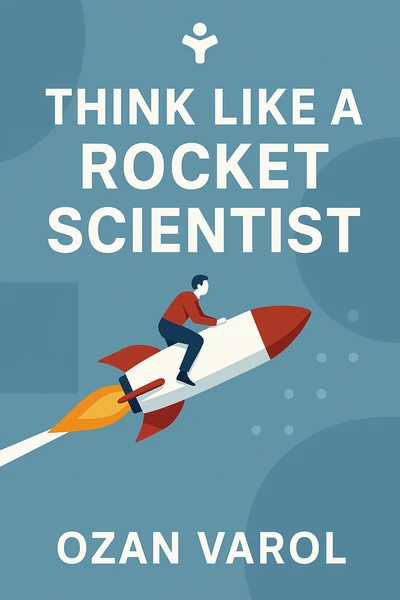
Think Like a Rocket Scientist: Simple Strategies You Can Use to Make Giant Leaps in Work and Life
Ready to Take Action?
Get the Mentorist app and turn insights like these into daily habits.