Understanding the secret of evolution’s unwritten rules
Game theorists first used strategic puzzles—Prisoner’s Dilemma, Chicken game—to explore how rational decisions clash and stabilize. When John Maynard Smith applied this to evolution, the result was the Evolutionarily Stable Strategy, or ESS, a breakthrough in biology. Imagine two male birds competing for territory: one fights fiercely like a “hawk,” the other retreats like a “dove.” If everyone behaved as a dove, a lone hawk wins easily. If everyone fought as hawks, both get hurt. Somewhere in between—say 60% hawks, 40% doves—neither type can do better by switching strategies. That mix, the ESS, remains stable through generations.
The ESS is not a conscious choice but an emergent property of repeated interactions. It explains why animal fights seldom end in deadly violence; instead they ritualize aggression to maintain a stable ratio of risk and reward. ESS underpins behaviors from mating rituals to resource sharing. When conditions shift—predators change, resources vanish—the stable mix may shift too, leading to new evolutionary peaks.
In human terms, ESS applies to office politics, social norms, and negotiation tactics. Whether we’re deciding to speak up in meetings (“hawk”) or listen (“dove”), the collective payoff often settles into a predictable balance. Recognizing these unwritten rules helps us navigate conflicts with greater foresight.
ESS reframes “winning” not as total dominance, but as achieving a strategy mix that no rival can successfully invade. That insight alone can transform how we view cooperation and competition in any complex system.
Think of a recurring tension in your day—perhaps speaking up in meetings versus keeping the peace. List the pay-offs and costs for both moves, then imagine how a 60/40 mix might actually stabilize the team’s productivity. Rather than flipping to extremes, you start spotting the natural middle ground that no one can unseat. Tonight, try that calibrated approach with one conversation.
What You'll Achieve
You’ll gain a systems-level mindset for resolving conflicts, leading to calmer negotiations and more resilient process designs.
Map an everyday ESS scenario
Identify a recurring conflict
Notice a situation at work or home where two options constantly compete—like speaking up versus staying quiet—and sketch the stakes for each choice.
List costs and benefits
Write down the gains and losses for each option, including time, social risk, and personal comfort. Quantify them with rough points if you like.
Spot the stable mix
Compare scenarios: if everyone chose option A or everyone chose B, what would happen? Imagine a 50/50 split and see which mix feels more resistant to change.
Reflection Questions
- Which areas of your life seem stuck in binary conflict, and where might an intermediate strategy thrive?
- How does recognizing an ESS shift your view of cooperation versus competition?
- What unexpected payoff might you gain by adopting a mixed‐strategy approach in your next team meeting?
Personalization Tips
- A marketing team debates bold ads vs. safe ads—calculate potential sales gains against brand risk.
- In family dinner, kids push for dessert vs. healthy choice—balance nutrition loss vs. happiness gained.
- In a study group, decide whether to lead discussion or let others talk—assess skill growth vs. group harmony.
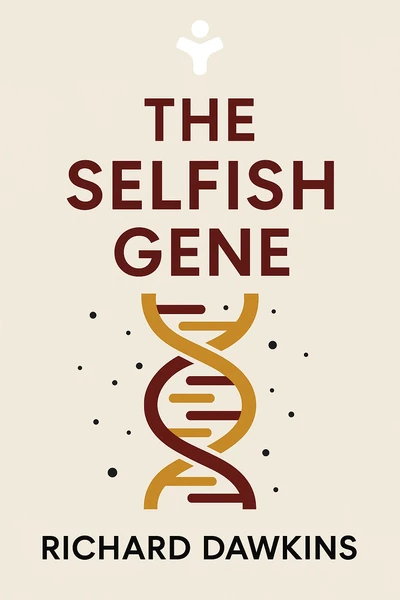
The Selfish Gene
Ready to Take Action?
Get the Mentorist app and turn insights like these into daily habits.