Bridge the Impossible Gap With What You Have
You’re staring down the elephant in the room: “I don’t have enough time, education, or money.” It’s tempting to fold—everyone’s been there. But consider Hana, a graphic designer in a small town who dreamed of launching an art-therapy side business. She lacked formal certification, startup cash, and even a clinic. Yet she chose to focus on what she did have: evening hours, a public library’s free workshop, and a network of friends supportive of her cause.
Hana blocked two nights a week to study online art-therapy basics, hosted pay-what-you-can sketch sessions in her living room, and traded her own designs for rented studio space. Within three months, her calendar was full—and she had proven demand.
Economist Ronald Coase showed that when transaction costs are too high, markets don’t form. But Hana’s DIY approach collapsed those costs: she learned on the job, traded skills instead of paying fees, and turned empty hours into traction.
This isn’t a once-in-a-career hack; it’s a method. Whenever “no resources” feels true, break your problem into “what I do have” and “what small next step I can do today.” That mindset neutralizes the TEM Gap and jumps you onto the path. You’ll surprise yourself at how resourceful you can be.
Instead of waiting for perfect conditions that might never come, take stock of your toolkit and move. Your first bootstrap sprint begins now.
When that familiar “I don’t have enough” thought appears, pause and list exactly what you do have—hours tonight, free courses, friendly contacts. Then decide on one bootstrap workaround, like trading your skill for a needed resource or enrolling in a free tutorial, and calendar that first session tonight. Use what you have and start now.
What You'll Achieve
You will dismantle limiting beliefs about scarcity, boost creative problem-solving skills, and transform existing resources into momentum for meaningful projects.
Explode the TEM Excuses
List your TEM excuses
Write down every “I need more” thought—time, education, money—holding you back from starting your idea.
Inventory existing resources
Next to each excuse, list what you do have: available hours, free online courses, low-cost tools, helpful contacts.
Identify a bootstrap solution
For each resource gap, brainstorm a do-it-yourself workaround—peer learning groups, bartering skills, weekend focus sprints.
Commit to start today
Choose one workaround and schedule your first move—maybe enrolling in a free tutorial or carving out a one-hour focus block.
Reflection Questions
- What immediate skill or connection can I leverage this week?
- How can I trade value instead of spending money?
- What two free tools or platforms can I explore today?
- What will I commit to complete before bed tonight?
Personalization Tips
- A student could join an online forum to learn coding instead of waiting for a college course.
- A freelancer might trade design services for bookkeeping help rather than hiring an accountant.
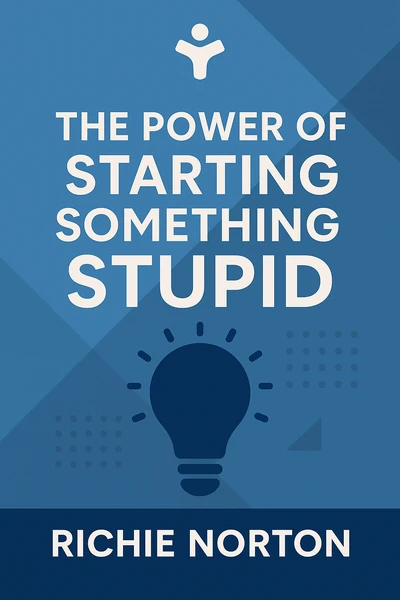
The Power of Starting Something Stupid: How to Crush Fear, Make Dreams Happen, and Live without Regret
Ready to Take Action?
Get the Mentorist app and turn insights like these into daily habits.