Unlock Hidden Value in Ideas Others Call Silly
We all carry a mental filter that marks certain thoughts and hunches as “stupid” before we even examine them. This reflex was once studied by psychologist Daniel Kahneman as an example of our mind’s fast, intuitive thinking—our autopilot judgment system.
Picture a friend who dreams of selling homemade candles online. The first thought? “That won’t sell—you don’t have a retail budget.” Automatic judgment creeps in, and the idea is shoved aside without a second thought.
Yet underneath that rejection lies a hidden contextual shift: niche craft markets have boomed via social platforms. A small-scale test, perhaps posting a candle photo on Instagram, might reveal eager buyers. By intentionally reframing, you suspend snap judgments and let evidence speak.
This process parallels cognitive-behavioral techniques therapists use to question distorted thoughts: by identifying the assumption, examining the evidence, and exploring alternatives, you break free from mental autopilot. It’s not about backing every wild idea, but about giving each one a chance to show real data instead of default dismissal.
When you practice reframing enough, you build mental agility and uncover opportunities you once blocked. That gap between “stupid” and “smart” can hide your next big leap.
First, list all your dismissed ideas without self-criticism, then for each, write down the fear or assumption turning it into a “dumb” thought. Next, brainstorm one positive outcome that would defy that label, and finally select the idea with the highest possible reward for a quick, no-risk trial. Give it a go tonight.
What You'll Achieve
You will transform judgmental thinking into open-minded experimentation, leading to fresh insights, data-driven decisions, and untapped opportunities.
Reframe Your Dumb Idea
List your “stupid” hunches
Spend five minutes writing down ideas you’ve dismissed as crazy or unimportant. No judgment—just capture them all.
Challenge each label
Next to each idea, ask “What assumption labels this as stupid?” Identify fears, lack of knowledge, or others’ opinions hiding behind that judgment.
Spot potential upside
For each, jot one possible benefit if it worked—new skills, a fresh product, or a breakthrough connection.
Pick one to test
Choose the idea with the biggest gap between its perceived risk and potential gain and commit to a quick experiment or sketch.
Reflection Questions
- Which idea did I quickly dismiss today and why?
- What evidence could prove that idea valuable?
- How might one small test change my perspective on that idea?
- Who could help me gather real feedback on this experiment?
Personalization Tips
- A teacher might reframe a novel lesson plan as an experiment, not a risk to the curriculum.
- A hobbyist photographer could treat a wild editing style as a creative test rather than a guaranteed flop.
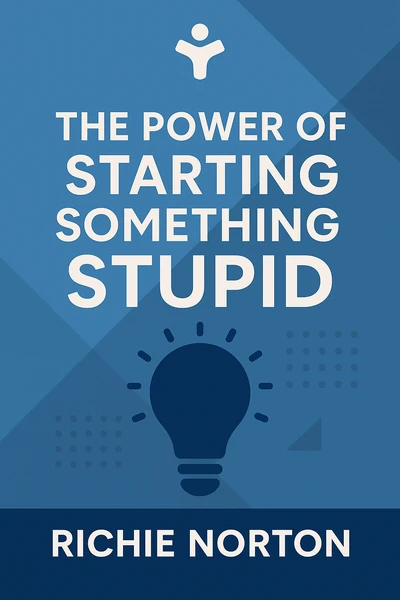
The Power of Starting Something Stupid: How to Crush Fear, Make Dreams Happen, and Live without Regret
Ready to Take Action?
Get the Mentorist app and turn insights like these into daily habits.