Why your confidence might be misleading you
When Emma trained alone for a triathlon, she believed her swimming was top‐tier—until race day, when the official split time surprised her. That gap between belief and reality is the Dunning-Kruger effect: people with limited skills often lack the self‐awareness to recognize their deficits. It’s a “double burden”—they perform poorly and can’t judge how poorly they’re doing.
Back home, Emma signed up for a coached swim clinic and posted her laps in a community forum. Hearing precise lap times and friendly critiques stung at first, but also lit a spark. She realized her self-confidence was built on impression rather than measurement. Trusting her initial belief would have left her plateaued, never correcting the subtle flaws in her stroke.
Psychologists David Dunning and Justin Kruger found this bias in tests of humor, logic, and grammar. The solution isn’t blind confidence—it’s balanced humility. By seeking data and feedback, you ground your confidence in facts, staying motivated to learn rather than risk overconfidence pitfalls.
You begin by taking a skill-relevant quiz or timing a practice to gather objective data, then ask two trusted peers for one clear strength and one improvement area. You log where your self‐rating missed the mark and plan targeted learning: a short course or extra drills. This process anchors your confidence in reality and keeps you improving. Try it this week.
What You'll Achieve
You’ll align your self‐perception with real performance metrics, reducing blind spots and boosting genuine progress. Expect more accurate confidence, targeted skill gains, and balanced humility.
Check your self-perception with feedback
Seek objective data
Run a quick quiz or performance test relevant to your skill—public speaking, coding, or fitness—to compare results against your self‐rating.
Ask two trusted peers
Request candid feedback from colleagues or friends on one area you excel in and one you struggle with. Frame it as a chance to improve.
Log discrepancies
Record where your self‐rating diverges from external data or feedback. Identify patterns: overestimation or undue self-criticism.
Plan corrective steps
For each mismatch, outline a learning module—online course, book, or practice drill—to bridge the gap between perception and reality.
Reflection Questions
- Where have you overestimated your ability and faced surprising feedback?
- Who could you trust with honest feedback about one strength and one weakness?
- What immediate steps will you take to close the gap between belief and reality?
Personalization Tips
- In sports, compare your marathon pace against official race results rather than wristwatch estimates.
- At work, ask a mentor to review a recent presentation and note one strength and one weakness.
- For artists, post a sample sketch in an online group and tally constructive comments against your self-score.
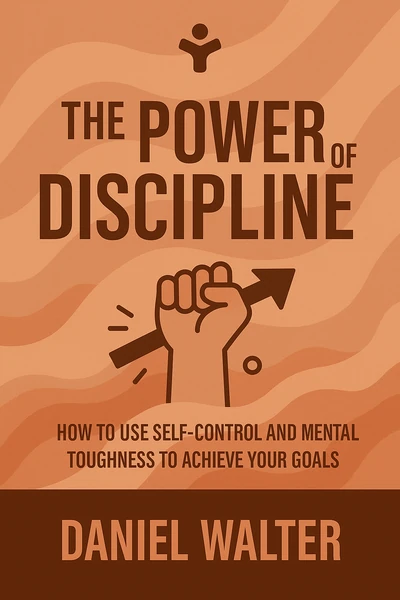
The Power of Discipline: How to Use Self Control and Mental Toughness to Achieve Your Goals
Ready to Take Action?
Get the Mentorist app and turn insights like these into daily habits.