Mobilize crowds when your solo brain hits its limit
In 2012, DARPA hid ten red balloons across the U.S., offering a $40,000 prize to whoever found them first. Satellite scans and spy planes looked hopeless. A group at MIT thought differently—they crowdsourced. By promising $2,000 to each finder and sharing rewards down referral chains, they launched a nationwide search network.
Within nine hours, 4,300 people had scanned their streets, parks, and cornfields. The in-group of ‘‘searchers’’ grew exponentially as each volunteer recruited friends. Instead of a trickle of reports, DARPA received hundreds of leads every minute—true crowdsourcing power.
What began as a whimsical balloon hunt proved a landmark case study: human networks—armed with a clear task, incentive, and digital tools—can solve colossal problems far faster than any single expert. From paper-map puzzles to global crises, the lesson is the same.
When your brain hits capacity, harness the crowd. Whether you need new ideas, local data, or emergency assistance, a mobilized network amplifies your reach. Crowdsourcing is your external ‘‘second brain’’—scalable, adaptable, and astonishingly effective.
Frame your challenge in a single clear sentence, offer small incentives or recognition for contributions, and broadcast it via e-mail, social feeds, or messaging apps. Watch your network turn into an instant task force capable of cracking the toughest problems. Try it on your next roadblock.
What You'll Achieve
You’ll expand your problem-solving capacity far beyond your own mind; externally, you’ll gather diverse inputs, speed results, and build a engaged community.
Tap your network to solve big problems
Frame a clear task
Outline precisely what you need help with—e.g., locating lost items, gathering votes, mapping data points—so helpers know exactly how to participate.
Incentivize participation
Offer small but meaningful rewards, public acknowledgment, or shared credit to motivate your crowd. Even symbolic prizes drive engagement in collaborative efforts.
Use digital platforms
Leverage apps, social media, or group-chat tools that let you broadcast the task to large audiences and collect responses quickly in one searchable dashboard.
Reflection Questions
- What task exceeds your solo bandwidth right now?
- Who could you invite to help and how could you reward them?
- Which platform best connects you with potential collaborators?
Personalization Tips
- A teacher asks parents to photograph neighborhood wildlife sightings for a class biodiversity map.
- A startup founder crowdsources logo polls to 200 followers on LinkedIn and Twitter.
- A nonprofit runs a virtual clean-up challenge by tracking participants’ GPS routes via a fitness app.
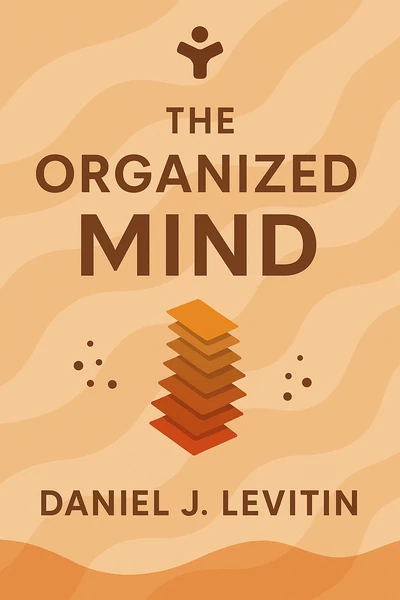
The Organized Mind: Thinking Straight in the Age of Information Overload
Ready to Take Action?
Get the Mentorist app and turn insights like these into daily habits.