Catch Your Own Procrastination in a Log
You’re sitting at your desk, coffee cooling, hit by the sinking feeling you should start that presentation. You pull out your notebook—not to begin writing slides, but to jot down that very hesitation. Three taps of the pen later, you’ve recorded the time, your sweaty palms, and the thought “I’ll do it after lunch.” It’s awkward at first, because you feel like you’re formalizing your weakness. Yet a curious shift happens: you’re no longer just avoiding work; you’re gathering evidence.
Over two afternoons, you spot a pattern. That exact thought pops up whenever your inbox pings, and you chase it by checking old emails. By the second day, you know exactly when and why you stall. You’ve transformed vague frustration into hard data.
Studies in self-monitoring show that simply tracking a habit can cut it by half. The next morning, you glance at your log before opening your laptop. You remember how you felt after avoiding tasks—guilty, jittery, unaccomplished—and decide instead to write one bullet point. Feels weird, but you dive in anyway.
This simple log becomes your coach. You stop auto-piloting into distraction and instead catch the moment of hesitation. You turn the tide from guilt to forward motion. By logging your avoidance, you learn to unlearn procrastination.
By carrying a small notebook for two days, you’ll catch each moment you stall, jot down the time, exact thought, and what you did instead. Notice the relief or regret that followed. This simple log shines a light on hidden habits so you can break free. Try it tomorrow afternoon.
What You'll Achieve
You will gain crystal-clear awareness of your unique procrastination triggers, turning unconscious avoidance into conscious choices and measurable steps.
Track each avoidance moment
Keep a two-day diary.
Carry a small notebook and note every time you delay a task, including the time, activity, and what you did instead.
Capture inner dialogue.
Write the exact sentence you told yourself—like “I’ll do it later” or “I can’t start until it’s perfect.”
Note the payoff.
Record how you felt after avoiding the task, for example relief, guilt, or boredom.
Reflection Questions
- What recurring thought did you write most often?
- How did noting the temporary relief affect your willingness to start later?
- Which small change could you make when you see that log entry next?
Personalization Tips
- A teacher logs every time she cleans her desk instead of grading papers.
- A dad notes when he scrolls his phone instead of fixing the leaky faucet.
- A student tracks each TV break that interrupts exam prep.
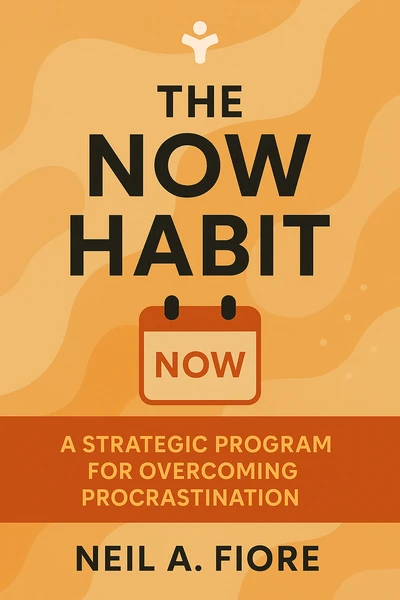
The Now Habit: A Strategic Program for Overcoming Procrastination and Enjoying Guilt-Free Play
Ready to Take Action?
Get the Mentorist app and turn insights like these into daily habits.