Why Procrastination Is Your Brain’s Anxiety Alarm
When you look at a daunting task—like a four-page report, a tax return, or finishing a school project—your brain often labels it as a threat. You don’t see laziness; you see your survival instinct kicking in. Imagine your inner alarm going off: “Danger, high stakes!” and you instinctively step back. This reaction feels counterproductive, but it’s your mind’s way of protecting you from perceived pain.
Notice how you’ve learned to treat certain tasks as catastrophic. You might think, “If I get this wrong, everyone will think I’m incompetent,” and that thought stops you cold. It’s the same mechanism that makes you hesitate before stepping onto a narrow ledge. Only here, the ledge is your to-do list.
Understanding procrastination this way shifts your view from self-blame to curiosity. Instead of calling yourself lazy, you examine the anxiety signal. You begin to ask, “What am I really afraid of?” with genuine interest. I might be wrong, but I suspect most of us have at least one task that feels like walking a tightrope.
By reframing procrastination as an anxiety alarm, you can lower the stakes, rewire your response, and calmly step forward. Studies in cognitive-behavioral therapy show that labeling fears reduces their power. Your alarm still rings, but now you can choose whether to pause, explore, or move ahead.
Think back to the last time you froze on a task. Picture yourself writing down each delayed item, then naming the fear that nudged you to step back. Map it with arrows in your notes, linking task to anxious thought to avoidance. By visualizing and labeling this loop, you reclaim control. Give it a try tonight.
What You'll Achieve
You will shift from feeling lazy and overwhelmed to recognizing fear as the real trigger, gaining emotional insight and clear steps to begin tasks with confidence.
Label your procrastination triggers
List recent delays.
Spend five minutes writing down three tasks you’ve put off this week and note what you felt when you considered starting them.
Identify the fear.
For each task, jot a few words about the anxiety it stirred—fear of failure, fear of criticism, or feeling overwhelmed.
Map the pattern.
Draw arrows linking each trigger to the fearful thought and then to your avoidance strategy, revealing the loop you repeat.
Reflection Questions
- What common thought arises when you face a task you delay?
- How does labeling that fear change your urge to avoid?
- What small test can you run to confront one anxious thought tonight?
Personalization Tips
- At work, Sarah noticed she delayed writing reports because she feared her boss’s critique.
- For her final exam, Marcus realized he avoided studying chapters that felt too dense and likely to stump him.
- Organizing her closet, Maria saw she put it off unless it threatened her weekend plans.
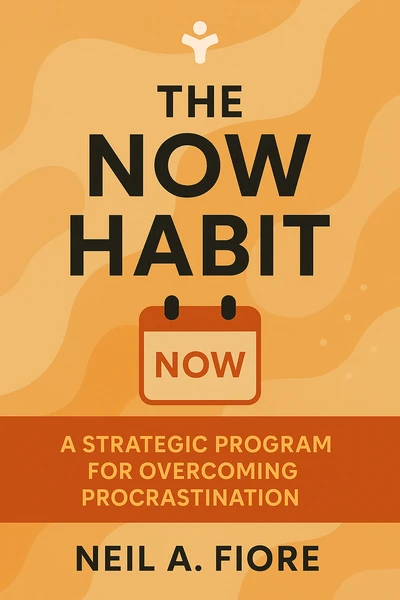
The Now Habit: A Strategic Program for Overcoming Procrastination and Enjoying Guilt-Free Play
Ready to Take Action?
Get the Mentorist app and turn insights like these into daily habits.