Why new habits feel awful, then awkward, then automatic
Most change attempts die because we mistake a temporary feeling for a permanent truth. The first days of a new habit often feel lousy. Your brain notices a deviation from routine and flags it as effortful. That spike in effort is not a verdict on the habit’s value, it’s an alarm from systems designed to keep you efficient, not excellent. Labeling the phases helps.
In Days 1–10, expect “Unbearable.” Novelty fades, friction feels high, and everything in you argues for the old path. Plan for this like weather: pre‑set the environment, make the smallest version always acceptable, and keep a short daily debrief. Days 11–20 are “Uncomfortable,” where repetition lowers friction but temptation stays loud. Here, consistency of time and trigger matters more than duration. Add a tiny reward, even just a visible streak, to tip the scales.
Days 21–30, you enter “Unstoppable,” not because the habit is easy, but because it’s part of who you are. Language shapes identity, and identity shapes persistence. A teacher once told me, “It became real when I heard myself say, ‘I’m a morning reader.’” She started bringing a paperback to the kitchen island, and the spine creased in the same spot for a week. Small signs, big meaning.
This three‑phase map aligns with well-known dynamics: context-dependent repetition moving actions from deliberative systems (prefrontal cortex) to more automatic loops (basal ganglia), affective forecasting errors that exaggerate early discomfort, and identity-based motivation that sustains effort when novelty fades. By tracking both effort and payoff weekly, you learn whether to shrink the habit to keep it alive or expand it to keep it engaging.
Pick one keystone behavior you’ll run for 30 days, then write down the three phases so you know what weather to expect. For Days 1–10, set up your space, define the smallest acceptable version, and tick a box after each rep with a two‑line debrief. In Days 11–20, keep the same time and trigger and add a simple reward like a streak board or playlist to make showing up easier. In Days 21–30, shift your self‑talk to “I am a person who…” and explain your habit to someone else once to lock it in. Do a weekly 1–10 rating for effort and payoff to guide tweaks. Start the map tonight.
What You'll Achieve
Internally, you normalize discomfort and grow an identity that supports persistence. Externally, you complete 30 consecutive days of a keystone habit and see measurable outputs (e.g., 15 deep‑work sessions, 30 walks).
Use the 30-day three-phase map
Name one keystone habit for 30 days
Pick a behavior that unlocks other wins, like a morning focus block or daily walk. Commit in writing to one habit, not five.
Plan supports for Days 1–10 (Unbearable)
Preload environment tweaks, tiny versions, and a visible checklist. Expect resistance and schedule a short daily debrief: “What helped? What hurt?”
Stabilize during Days 11–20 (Uncomfortable)
Keep the same time and trigger. Add a small reward, like a checkmark chain or a favorite playlist, to make repetition easier.
Lock identity in Days 21–30 (Unstoppable)
Switch your language to identity, e.g., “I am a person who…” and teach the habit to someone else once. Teaching consolidates learning.
Track feelings and performance weekly
Rate effort and payoff on a 1–10 scale. Patterns reveal whether to shrink the habit or raise the bar.
Reflection Questions
- Which single habit would unlock other wins if it stuck?
- What will I do on the first day I don’t feel like it?
- How will I reward consistency without undermining the habit?
Personalization Tips
- Work: Make “thirty minutes of deep work before email” your keystone and track it with a wall calendar.
- Health: Walk 10 minutes after lunch daily, then invite a friend to join during Days 21–30.
- Studying: Do a 20‑minute spaced‑repetition session at 7 p.m., same desk, same trigger.
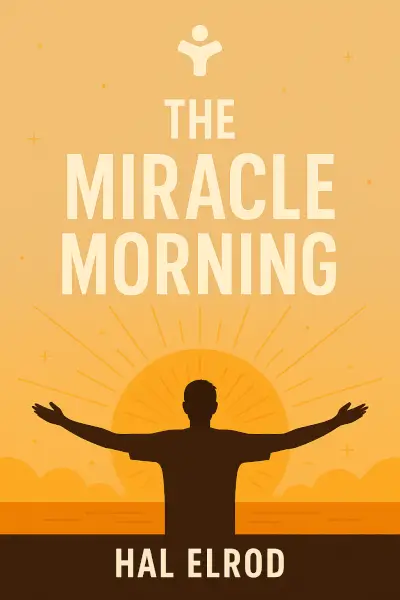
The Miracle Morning: The Not-So-Obvious Secret Guaranteed to Transform Your Life (Before 8AM)
Ready to Take Action?
Get the Mentorist app and turn insights like these into daily habits.