Cultivate a growth mindset and turn mistakes into milestones
You’re at your desk facing a blank screen and the infamous blinking cursor. You’ve nailed presentations, but today the slides look foreign. Your inner voice whispers, “You’ll never get this right.” You close your eyes and inhale the hum of the office—typing keys, a distant phone ring. Pause for a second, then exhale the thought. What if instead you said, “I haven’t mastered this—yet”? “Yet” squeaks in like a door ajar, letting fresh air of possibility swirl through your mind.
Research by Carol Dweck calls this the growth mindset—believing your abilities can be honed through effort. Your brain physically rewires when it expects to learn, boosting motivation and resilience. When you label a tough sales call or a tricky budget forecast not as a dead end but as data on your learning curve, your anxiety melts away. You’re simply collecting information on how to improve.
Mindfully noticing that harsh self-criticism and replacing it with a curious question—“What can I learn from this?”—is the key. Like a friendly coach, you shift from judgment to exploration. Suddenly, that blank screen becomes a playground for drafts and feedback. The mistakes you once feared now peek at you like hidden treasure maps.
Next time you stumble, tune in to your breath, check for mental “yet,” and treat each misstep as an experiment. You’re retraining your mind from a critic to a cheerleader. In that space, mistakes aren’t failures but milestones on your path to skill.
When you find yourself stalled, take a breath and add ‘yet’ to your complaint. Notice how that simple word turns an obstacle into an experiment. Write down one lesson from your latest flop and share it in your next chat with a colleague. Make this a weekly ritual—over time you’ll see your mindset shift from fear of failure to a curiosity-driven drive for mastery. Give it a try tonight.
What You'll Achieve
You’ll rewire your response to setbacks by seeing them as essential feedback loops. This mindset shift fuels continuous learning, reduces self-doubt, and increases perseverance, leading to stronger skills and greater confidence.
Train your brain to see challenges as fuel
Celebrate small failures
Write down one thing you tried recently that didn’t work out. Next to it, note what you learned. Over time, you’ll see that each ‘failure’ is actually progress.
Ask ‘yet’ not ‘never’
When you catch yourself thinking ‘I can’t do this,’ add ‘yet’ to the sentence. ‘I can’t master that report—yet’ nudges your brain toward possibility.
Seek stretch opportunities
Volunteer for a task you find intimidating. Prepare a plan, lean on feedback, and document each lesson. You’ll build both skill and confidence.
Reflection Questions
- What word can you add to your next ‘I can’t’ statement to open your mind?
- How might celebrating small mistakes change your energy for the week ahead?
- Which challenging task can you volunteer for as an opportunity to grow?
Personalization Tips
- A student struggles with algebra and writes, ‘I don’t get quadratic equations—yet.’
- A marathon runner logs a failed 5K time, then outlines the training tweak that will improve the next race.
- A novice painter shares a workshop sketch, then lists the techniques they discovered while trying it.
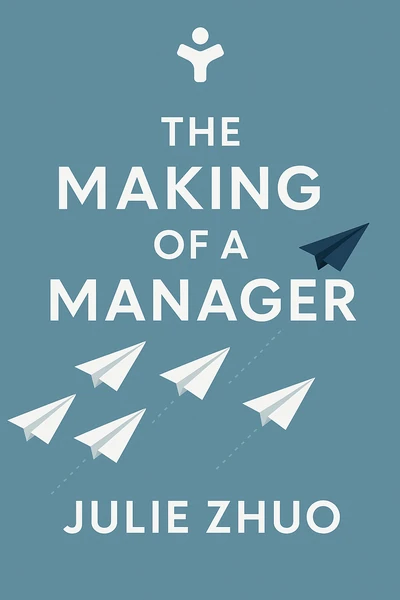
The Making of a Manager: What to Do When Everyone Looks to You
Ready to Take Action?
Get the Mentorist app and turn insights like these into daily habits.