Rising Fees Always Mean Falling Performance
Acme Corp’s treasurer, Lisa, noticed her firm’s operating reserves earned barely 4% a year while the corporate bond index hovered at 5.5%. With $50 million in reserves, she asked her team to break down every treasury fund’s operating expense. The reveal was dramatic: fees ranged from 0.15% to 1.2%.
She shifted $30 million from the highest-fee fund into a short-term Treasury index fund charging just 0.07%. Within a year, the treasury yield climbed by nearly 0.5%—a $150,000 gain. When she shared the results with the CFO, the applause wasn’t just for the extra revenue, but for the simplicity of the move.
Firms and individuals alike often assume fund costs are set in stone, but expense ratios remain surprisingly sticky in each quartile. Behavioral inertia keeps investors locked into high-fee funds, even when cheap alternatives exist.
By ranking funds by cost first and ignoring fanciful performance pitches, Lisa unlocked an immediate financial win. That margin of 0.5% now compounds year after year, powering deeper R&D budgets and boosting employee benefits.
Imagine you’re Lisa walking into the treasurer’s meeting: you present a simple slide of fund fees, then propose a switch to the lowest-cost index fund. You describe the extra half-percent yield and the $150,000 it brings home—immediately. Act on that same principle today in your own accounts by ranking costs, then executing a low-cost swap. It’ll free up cash every single quarter.
What You'll Achieve
You’ll develop a finance-first mindset that spots cost inefficiencies and produces measurable gains in yield, improving both corporate and personal balance sheets.
Rank Funds by Cost Before Anything Else
Rank your funds by expense ratio.
On a sheet of paper or spreadsheet, list each equity or bond fund with its annual expense ratio, sorting lowest to highest.
Check for sales loads.
Mark funds that carry front-end or deferred loads. These could erase a year’s yield in the first purchase alone.
Shift assets to low-cost index funds.
Move money from the highest-fee quartile into no-load index alternatives with expense ratios under 0.25%.
Reflection Questions
- How much do high fees cost me in actual dollars this year?
- Which index fund offers an identical market return with a fraction of the cost?
- What steps will I take to monitor fund expenses quarterly?
Personalization Tips
- At work: Convert your large-cap growth slot into a market-cap S&P 500 index fund with a 0.10% fee.
- Health savings: Replace an expensive small-cap mutual fund in your HSA with a low-cost small-cap index ETF.
- Side business: Park excess cash in a 0.05% short-term Treasury index fund rather than a 0.75% money market fund.
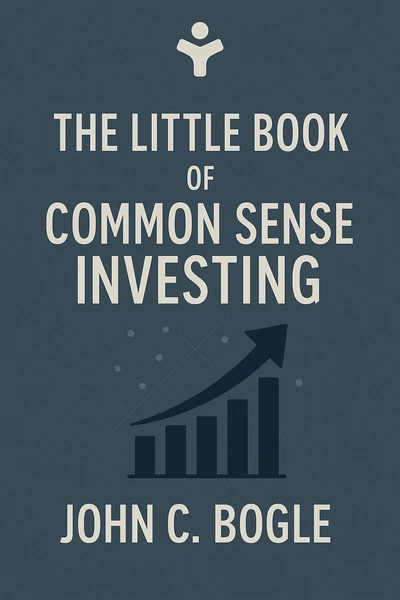
The Little Book of Common Sense Investing: The Only Way to Guarantee Your Fair Share of Stock Market Returns
Ready to Take Action?
Get the Mentorist app and turn insights like these into daily habits.