You Only Get What You Don’t Pay For in Investing
Costs in mutual funds act like tiny leaks in a ship’s hull: each fee takes a bit more of your potential return. Imagine a jar at your desk that you fill daily with the market’s returns—they drip into that jar through a funnel. Now picture holes punctured around its sides. Every month you patch some, but new leaks appear as fees, sales loads, and trading costs.
Most investors don’t notice these tiny holes. They see a healthy stock line rise on their screen, then shrug at a 1–2% annual fee that barely seems worth tracking. But the math is merciless: over decades, those small percentages compound into massive shortfalls. I might be wrong, but think of it like running a marathon while losing a sip of water every mile—you wouldn’t last until mile 25.
Behavioral science shows we underweight small losses, yet fees are exactly that—tiny predictable losses. Studies confirm that funds with higher expense ratios underperform low-cost peers by about their fee differential every single year.
When you subtract costs, you see your true return: gross market gains minus all fees. That is your real wealth increase, guaranteed. Remember the relentless rule: market return minus cost equals investor return.
Turn your understanding into action by grabbing your last six fund statements, tallying up every fee and sales load, then subtracting those totals from the gross returns you’ve earned. Compare this net figure to a simple S&P 500 index fund you could’ve held instead. This exercise reveals exactly how much you retain vs how much flows to others—so you can make better choices starting now. Give it a try tonight.
What You'll Achieve
You will shift your mindset to see fees as drains on your wealth and develop a habit of choosing low-cost funds, leading to measurable gains in net returns and greater confidence in your investment plan.
Subtract Your Costs to Reveal Your Returns
List your annual fund expenses.
Gather your statements from retirement, brokerage, or IRA accounts and write down each fund’s expense ratio, sales load and any advisory fees you pay.
Calculate net returns.
Subtract those combined fees from each fund’s gross return. For example, if your fund earned 10% and cost you 2%, you pocketed just 8%.
Compare against a benchmark.
Line up your net returns next to a simple index, like the S&P 500 Index fund. Note any shortfalls and reflect on whether you’re earning your fair share of market returns.
Reflection Questions
- Which of my current funds charges the highest combined fees?
- How would my retirement balance change if I cut fees by 0.5% per year?
- What small, immediate steps can I take to reduce my investment costs?
Personalization Tips
- At work: In your 401(k), replace a high-fee large-cap growth fund with a no-load, low-cost index alternative to boost net returns.
- In college savings: Swap an expensive actively managed 529 plan for an index-based version to reduce fees by up to 1%.
- For side income: If you’re investing profits from a small business, choose a bond index fund with a 0.10% expense ratio over one charging 0.75%.
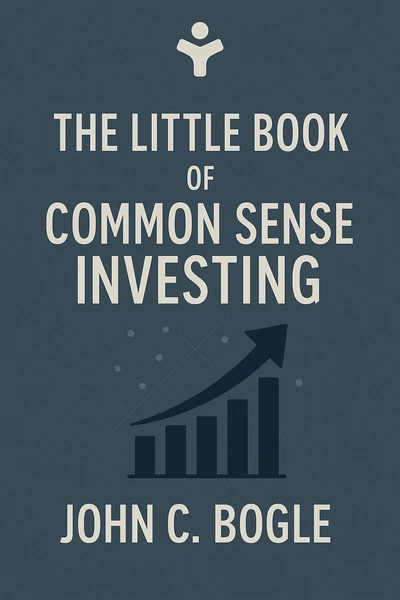
The Little Book of Common Sense Investing: The Only Way to Guarantee Your Fair Share of Stock Market Returns
Ready to Take Action?
Get the Mentorist app and turn insights like these into daily habits.