The strangest virtue on this list is the one they teach on the Grinder
Humor might be the least likely quality to appear on a list of heroic virtues next to courage and integrity, and that is exactly the point Admiral William H. McRaven wants to make with it.
He locates its clearest classroom on what Navy SEALs call the Grinder, a stretch of rough asphalt where new officers face a daily ritual of physical training combined with public, merciless teasing about everything from their college choice to their love life. McRaven remembers his own first morning there, when a chief needled him about being too tall for his own good, and he shot back a line about being taller than the chief himself, a man visibly sensitive about his height. The circle went quiet for a beat before the chief burst out laughing. Welcome to the Teams, Ensign. Passing that test, McRaven says, mattered more to his acceptance than any physical score.
He extends the same idea into far darker settings: soldiers in hospital burn wards trading one-liners about their own injuries, eulogies for fallen friends built almost entirely around old pranks, because a life remembered through laughter is remembered as one that was actually lived. He points, too, to Abraham Lincoln, who kept telling self-deprecating jokes throughout the Civil War, criticized for it at the time, and who reportedly believed children should be taught humor in school alongside reading and arithmetic.
McRaven's argument is that humor isn't a break from the other virtues, it's a way of practicing all of them at once. Laughing at danger is a form of courage. Laughing at yourself is a form of humility. Turning a joke on your own failure instead of someone else's is a form of integrity. What humor does, in every one of these settings, is let people stay present with something painful, a wound, a loss, a public failure, without either denying it or being crushed by it. That, McRaven suggests, is a skill worth deliberately building rather than waiting to naturally possess.
Next time something goes wrong in a way that stings, a mistake at work, an awkward moment, a piece of bad news, try making one honest joke about it, aimed at yourself rather than anyone else, before you say anything defensive. Watch for the moment humor is being used to dismiss real pain rather than to survive it, and pull back if that's what's happening. When you're comforting someone else who's struggling, look for a way to let them laugh at the situation with you rather than only offering sympathy, since both have their place. Practice this the way SEAL recruits do on the Grinder, as a small daily habit rather than a talent you're either born with or not.
What You'll Achieve
The listener starts treating humor as a deliberately practiced skill that carries courage, humility, and integrity all at once, using it to stay present with pain, failure, or fear instead of either denying it or being overwhelmed by it.
How to build humor as a practiced skill
*Make one joke at your own expense before defending yourself.*
When something goes wrong, try a genuine, self-directed joke first, instead of leading with an excuse or defensiveness.
*Watch for humor used to dismiss rather than survive pain.*
Notice the difference between a joke that helps someone stay present with a hard truth and one that avoids it entirely.
*Offer laughter alongside sympathy when comforting others.*
When someone is struggling, look for one moment where shared laughter fits alongside your support, without replacing it.
*Treat it as a daily habit, not a fixed trait.*
Practice finding the smallest workable joke in ordinary setbacks regularly, the way a skill is built rather than something you either have or don't.
Reflection Questions
- When was the last time you made a genuine joke at your own expense, and how did it change the room?
- Is there a painful situation right now where a small, honest joke might help you or someone else stay present with it rather than avoid it?
- Do you use humor mostly to deflect attention from yourself, or mostly to include others in something hard?
Personalization Tips
- Someone who trips in a crowded office says, and the judges give that a 4 out of 10, instead of turning red and rushing off.
- A friend visiting someone recovering from surgery brings a genuinely funny story about their own most embarrassing hospital visit, rather than only offering concerned silence.
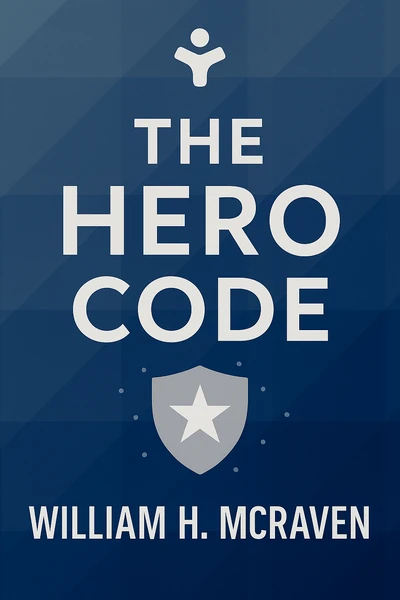
The Hero Code: Lessons Learned from Lives Well Lived
Ready to Take Action?
Get the Mentorist app and turn insights like these into daily habits.