Can a father forgive the men who accidentally killed his children
Can a father forgive the men who accidentally killed his sons and daughter? Admiral William H. McRaven had to find out, because he was the commander responsible.
Weeks earlier, a raid targeting a Taliban leader in the village of Gardez had gone wrong. Soldiers, seeing armed figures on a rooftop, fired, and two of an elderly man's sons were killed, along with his daughter and two other women hit by stray rounds. McRaven travelled to the man's home to offer the traditional compensation of sheep and money, but mainly to apologize in person, and he had no idea how the father could possibly forgive him. Before he went, he asked his Afghan counterpart, General Salam, what he should say. The father will forgive you, Salam told him simply. It is what Allah would want. Salam explained further: forgiveness, in his understanding, wasn't a gift given only to the person forgiven. It relieved the giver of a second burden, not the grief itself, which forgiveness cannot touch, but the added weight of carrying hatred on top of it.
Sitting across from the father and his visibly furious surviving son, McRaven said what he had prepared: that he grieved for the man's loss, that both of them believed in a God capable of mercy, and that he was asking forgiveness for an unforgivable tragedy. The son leaned over and whispered to his father, then spoke for him. We will not keep anything in our heart against you.
McRaven places that moment beside a very different one: the courtroom where families of the nine people murdered by Dylann Roof at a Charleston church stood, one after another, and told him they forgave him. Neither the Gardez father nor those families were pretending the harm was small. McRaven, quoting the philosopher Andre Comte-Sponville, frames what they were actually doing as refusing to become an accomplice to the hatred that caused the harm in the first place, not on behalf of the person who hurt them, but for their own sake.
This is where forgiveness gets genuinely hard, harder, McRaven suggests, than most acts of physical courage. Anger feels like it's protecting you. Giving it up feels like losing your only leverage, your only proof that what happened mattered. McRaven's answer is that retribution never actually delivers the relief it promises. What forgiveness offers instead, without in any way excusing the offense, is the difference between staying a victim of what happened to you and becoming, deliberately, its victor.
Identify one grievance you are still carrying, large or small, and notice honestly what you believe the anger is doing for you, whether it feels like protection, proof, or leverage. Ask yourself plainly whether holding onto it has actually delivered any of that, or whether it has mostly just stayed heavy. Choose one specific offense, not necessarily the largest one, and decide, as a deliberate act rather than a feeling that needs to arrive first, to stop keeping it in your heart against the person responsible. This does not require telling them, or excusing what they did, or pretending the harm was small. It only requires you to stop being the one still carrying it, and to notice, afterward, what that absence feels like.
What You'll Achieve
The listener learns to treat forgiveness as a deliberate decision that relieves them of carried anger, rather than a feeling that must arrive on its own or an endorsement of what happened, moving them from staying a victim to becoming, in McRaven's phrase, the victor.
How to set down a grievance you've been carrying
*Name the grievance and what you think it's protecting.*
Identify a specific offense you're still carrying and be honest about what you believe your anger toward it is accomplishing.
*Test whether it's actually working.*
Ask honestly whether holding onto this anger has delivered the relief, leverage, or protection you expect, or whether it has just added weight.
*Choose to forgive as a decision, not a feeling.*
Decide to release the grievance deliberately, without needing to feel ready first, and without requiring the other person to know or apologize.
*Notice what changes once you set it down.*
Pay attention, in the days after, to whether the absence of that carried anger changes anything about how you move through your week.
Reflection Questions
- What grievance have you been carrying that you originally believed was protecting you, and has it actually done that?
- What would it cost you to stop keeping a specific offense in your heart against someone, even if they never know you've let it go?
- Is there a difference, for you, between forgiving someone and excusing what they did?
Personalization Tips
- Someone still resentful of a sibling's old betrayal decides to stop bringing it up at family gatherings, not because the sibling apologized, but because carrying it has stopped serving any purpose.
- An employee wronged by a former boss's dishonest reference chooses to let the anger go before a job interview, rather than carrying it into the room.
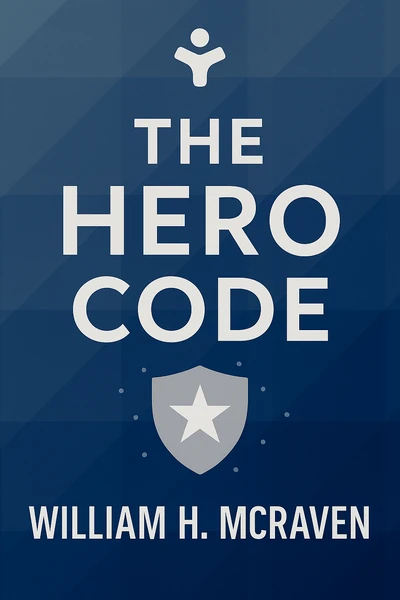
The Hero Code: Lessons Learned from Lives Well Lived
Ready to Take Action?
Get the Mentorist app and turn insights like these into daily habits.