A three-star admiral, ten minutes late, because a nineteen-year-old wouldn't budge
Most people assume that doing your duty well means following the person above you without question, especially when that person outranks you by a great deal. A young Air Force sentry named Airman Jackson proved otherwise, on a night in Afghanistan when President Obama's helicopter movement between Bagram and Kabul had been grounded by weather, and Admiral William H. McRaven, then a three-star admiral, was suddenly called to brief the president in twenty minutes.
McRaven's convoy raced toward the airfield gate with eight minutes to spare. Jackson, a small woman in oversized body armor holding an M4, put up her hand and stopped the cars. His security officer explained who was inside. His sergeant major explained again, more forcefully. Jackson didn't move. She had been told no one was to pass without authorization, and McRaven didn't have it yet. When McRaven himself got out and explained that he needed to brief the commander in chief, Jackson, visibly nervous, still held her ground: Sir, I know you have your job to do, but I have my job to do as well. Only when her chain of command confirmed clearance did she wave the convoy through and salute as it passed.
McRaven arrived ten minutes late to brief the president, who never asked why. Afterward he pulled his convoy over at Jackson's gate again and told her, with some heat, exactly how late she had made him. Then he handed her his own command coin, reserved for exceptional work, and told her she could work for him anytime.
The idea McRaven draws from this is what the military calls General Order Number One: you are responsible for your post and everything within view of it, not because someone is watching, but because the whole structure above and below you depends on you actually doing that job. A three-star admiral's urgency did not override a nineteen-year-old airman's orders, because her duty and his were not in competition, they were two links in the same chain. McRaven points out that the old proverb about a kingdom lost for the want of a nail works the same way: a clerk's paperwork, a nurse staying in an operating room during a rocket attack, a supply sergeant working two days straight for a Thanksgiving turkey. None of it looks important in isolation. All of it is load-bearing.
Look at the job in front of you this week, whatever it is, and ask what actually depends on you doing it properly, even the part nobody would notice if you skipped it. Choose one task you have been treating as beneath your effort, and do that one at full standard today, the way Airman Jackson held her post even against a three-star admiral's urgency. When someone with more authority or more urgency pushes you to cut a corner that is genuinely yours to guard, say so plainly and hold the line, the way she did, rather than assuming their rank settles the question. Notice, afterward, who that small refusal actually protected.
What You'll Achieve
The listener starts treating even small or unglamorous responsibilities as load-bearing rather than optional, and learns to hold a boundary that is genuinely theirs to guard, even when pressured by someone with more authority or urgency.
How to hold a post that is genuinely yours
*Ask what depends on this task.*
Before dismissing a job as unimportant, trace who or what is actually relying on you doing it correctly.
*Do one 'small' task at full standard today.*
Pick something you've been treating as beneath your real effort and complete it properly, without cutting corners.
*Hold your post when pressured to skip it.*
If someone with more authority pushes you to bypass a responsibility that is genuinely yours, say so directly rather than deferring automatically.
Reflection Questions
- What responsibility have you been treating as too small to matter, and who is actually depending on it?
- When has someone with more authority pushed you to cut a corner that was genuinely yours to protect, and what did you do?
- What would it look like for you to hold your post the way Airman Jackson held hers, calmly and without apologizing for it?
Personalization Tips
- A junior compliance officer flags a rushed shortcut a senior partner wants to take, instead of assuming seniority settles the matter.
- A parent who is exhausted still checks their child's homework properly rather than signing off unread, because the teacher and the child are both relying on that check.
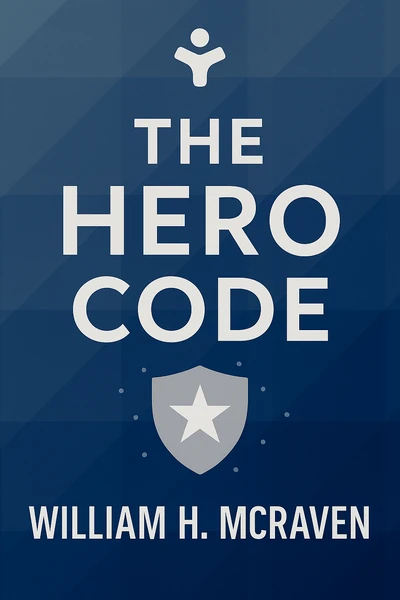
The Hero Code: Lessons Learned from Lives Well Lived
Ready to Take Action?
Get the Mentorist app and turn insights like these into daily habits.