The sacrifice nobody claps for is the one that actually counts
At 11 p.m., after a ten-hour hospital shift, a young certified nursing assistant does not drive home. She stops at her mother's apartment, reheats a plate of food, changes the bed sheets, and sits for twenty minutes before driving on. She has done this every night for three years, and no one gives her an award for it.
Admiral William H. McRaven argues that this is what sacrifice actually looks like for most people, and it is worth separating from the version most of us picture first. He tells the story of Private First Class Ralph Johnson, a nineteen-year-old Marine who, on a hillside in Vietnam in 1968, threw himself on a grenade to save the two men beside him and was killed instantly. Johnson's single act, McRaven writes, later helped change how an entire country of the 1960s saw the worth of a young Black Marine from the segregated South, and the Navy eventually named a destroyer after him. That kind of sacrifice is real, and it is rare, and McRaven is careful to say most of us will never be asked to make it.
The far more common form, he argues, is the unglamorous kind: the single mother working two jobs, the teacher staying late for a struggling student, the son who quietly changes his own plans to care for a parent. What makes these sacrifices count as heroic, in McRaven's telling, is precisely that nobody is clapping. There is no medal, no crowd, no gilded speech. There is only the choice to give a little of yourself, again, on a day nobody is watching.
He compares it to compound interest: a small deposit made every day, without fail, that eventually adds up to a kind of wealth that cannot be spent, only felt, in the form of gratitude and quiet self-respect.
Pick one person today, your family, a friend, or a stranger, and give them something small before you second-guess it: ten minutes of undivided attention, a task taken off their plate, or a few dollars toward something they need. Do it without mentioning it afterward, and resist the urge to wait for a moment that feels big enough to matter. Tomorrow, do it again, for someone else or the same person, and keep going daily rather than saving your generosity for an occasion. Over weeks you will notice the giving becoming less of a decision and more of a habit, and that habit, repeated without an audience, is exactly the kind of sacrifice that quietly builds a life worth respecting.
What You'll Achieve
The listener reframes sacrifice from a rare, dramatic act into a daily practice of giving time, attention, or resources without expecting recognition, and begins to build that giving into an unremarkable, repeated habit.
How to make daily giving a habit
*Give something small today, unprompted.*
Choose one person and offer ten minutes, one task, or a small amount of money, without waiting for a dramatic occasion.
*Give without announcing it.*
Skip the mention, the post, or the thank-you request. The absence of recognition is part of what makes the act count.
*Repeat it daily, not occasionally.*
Treat sacrifice like a habit rather than a special event. A little every day compounds; an occasional grand gesture does not.
*Track the giving, not the gratitude.*
Keep a private note of what you gave and when, rather than watching for a reaction, so you build the habit for its own sake.
Reflection Questions
- Who in your life is quietly making the unglamorous kind of sacrifice Ralph Johnson's story points toward, without anyone thanking them for it?
- What is one thing you could give away today, time, attention, or money, that would go unnoticed by everyone except the person who received it?
- Does your sense of what counts as sacrifice depend on someone else witnessing it?
Personalization Tips
- A manager gives up fifteen minutes before every meeting to check in on a struggling team member, with no mention of it in performance reviews.
- A retired man spends one afternoon a week driving elderly neighbours to appointments, never mentioning it unless asked directly.
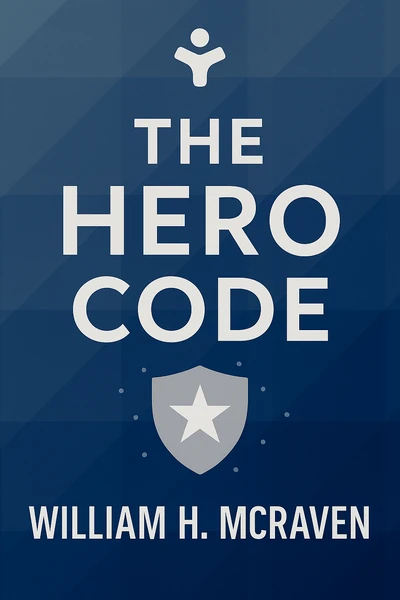
The Hero Code: Lessons Learned from Lives Well Lived
Ready to Take Action?
Get the Mentorist app and turn insights like these into daily habits.