Your body’s muscles know the truth before your mind can speak it
In the 1960s, chiropractor George Goodheart discovered that the body’s muscles would weaken if pressure were applied while the underlying belief or system was out of balance. This simple form of biofeedback was dubbed muscle testing, or applied kinesiology.
Decades later, Stanford physicist William Tiller and others showed that tiny changes in our energetic field—our thoughts or beliefs—can influence electronic devices. Your body, by contrast, is the most sophisticated biosensor of all, measuring truth or congruence in milliseconds.
Think of your body as a living computer. While your conscious mind fumbles with options, your subconscious mind already knows if a statement is true or false. All you have to do is learn to query it with gentle muscle tests.
Learning the Arm Test is like installing remote-control software on your innermost being. You can ask, “Is this food good for me?” or “Do I have a trapped emotion right now?” The body’s reflexive response—a locked arm for yes, a giving arm for no—tells you exactly what you need to know.
Scientists still debate the precise mechanisms, but therapists, healers and thousands of patients worldwide have quietly confirmed muscle testing’s accuracy. For you, it means bypassing self-doubt and tapping directly into your own truth source.
Imagine you’re talking to your body like a friend who already knows your answer. You set your arm or finger and say “yes” or “no.” Your body either stays firm or gives way. You’ll practice at home with harmless facts—“I live on Earth” versus “I live on Mars”—then move on to bigger questions about health or emotions. Within days, you’ll trust these signals more than your wandering mind.
What You'll Achieve
You will gain a reliable channel to your subconscious mind, answering yes/no questions instantly. This lets you pinpoint hidden imbalances—nutrition needs, emotional blocks, inherited fears—and take action with scientific confidence.
Build trust in your body’s kinesiological signals
Learn the Arm Test
Stand or sit with your arm out straight. Lightly place two fingers above your wrist and press down gently while saying true (your arm stays strong) and false (your arm goes weak) statements.
Fine-tune pressure and resistance
Adjust until just 5–10% of your strength holds the arm up. Test “yes” versus “no” to make sure the lock and release feel distinct before asking deeper questions.
Practice daily with harmless facts
Ask “I live on Earth,” then “I live on Mars.” Note consistent strong or weak responses. This trains your confidence in the results.
Get a friend involved
Contract a partner to resist your gentle downward pressure. They’ll quickly see muscle testing works, and you’ll build a feedback loop to refine your technique.
Reflection Questions
- What beliefs might your subconscious already hold about your biggest goal?
- How does your body respond to the thought that you can’t accomplish something?
- In what areas would you trust a muscle-test answer over your mind’s doubts?
Personalization Tips
- A teacher checks a one-word statement to see if the classroom temperature is ideal.
- A coach tests whether a player’s mindset is ‘confident’ before a big game.
- A parent spots if a child is telling the truth about who ate the cookies.
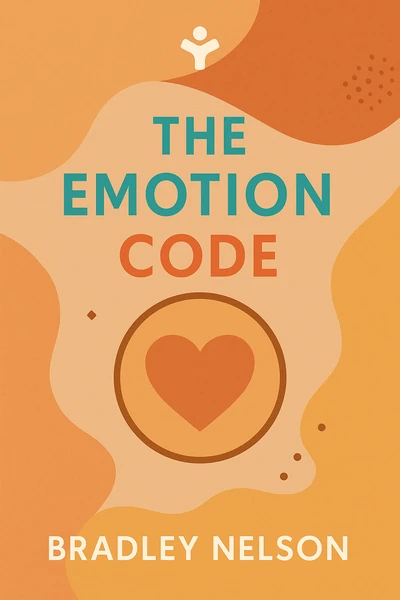
The Emotion Code: How to Release Your Trapped Emotions for Abundant Health, Love, and Happiness
Ready to Take Action?
Get the Mentorist app and turn insights like these into daily habits.