Understand gestures in sentences, not single words
Imagine María closing her laptop in a coffee shop, brimming with excitement about her startup pitch. Across the table, Josh leans in, nods, and smiles—but his legs remain tightly crossed, and his knuckles whiten as he grips the armrest. María’s heart leaps: he’s positively charged by her words and yet holding back. She might have rushed to the wrong conclusion if she’d watched only his enthusiastic nod.
She spends weeks studying kinesics, discovering that nonverbal clusters—called ‘body-language sentences’—hold far richer meaning than any single gesture. Each gesture is a word, every cluster a sentence. Alone, a head nod is agreement; paired with folded arms, it signals polite refusal. María realized that Josh was intrigued but uncertain, so she shifted her tone to address potential risks, unblocking his reservations.
Her next investor meeting illustrates the transformation: when she launched into her demo, every attendee’s arms and legs unfolded in perfect synchrony, and their clusters matched her words. The room literally relaxed—no defensive barriers, just open palms and forward-leaning stances. She closed the funding round that day, thanks to her new skill.
Psychologists like Albert Mehrabian and Ray Birdwhistell showed that 65–80 percent of our impact comes from body language rather than words. By parsing clusters in context, you can separate fact from fiction and persuade with precision.
When you next talk with someone, silently note three gestures you see together—perhaps a lean forward, palm-rub, and repeated head nod. Then match your tone to address the unspoken message: if they seem unsure, offer reassurance; if they’re defensive, soften your words. This small shift in reading and responding causes a remarkable wave of openness and trust, turning guarded hesitation into genuine engagement.
What You'll Achieve
You’ll shift from misreading isolated cues to grasping full nonverbal sentences, leading to sharper judgment and stronger connections. Internally, you’ll feel more confident decoding hidden objections. Externally, you’ll see smoother negotiations and deeper rapport with colleagues and clients.
Interpret signals in clusters
Observe multiple gestures
When you see someone scratch their head or rub their chin, note other simultaneous signals. Are their arms folded or are they leaning forward? This cluster reveals whether they’re puzzled, defensive, or evaluating.
Match words to posture
Listen to what they say and watch how their body moves. If they declare commitment while folding their arms, pause and ask clarifying questions rather than accepting the verbal promise.
Contextualize the setting
Consider the environment: a cold hallway can cause folded arms from chill, not hostility. Always weigh surroundings—room temperature, seating, noise—before judging a gesture.
Track changes over time
Notice how clusters shift. If someone crosses legs on your first point but uncrosses when you mention a benefit, they might be warming up to your idea.
Practice with video
Record short conversations (with permission) and replay them to spot overlooked clusters. Gradually, you’ll train your eye to decode complete nonverbal sentences instantly.
Reflection Questions
- What gestures do I most often notice in others, and what might their clusters mean?
- Recall a recent conversation where you misjudged someone—what single gesture did you focus on?
- How can you test your interpretation of one cluster in a low-stakes setting?
- What steps can you take to practice spotting clusters daily?
- How might your own habitual gestures form clusters that reveal your attitudes?
Personalization Tips
- At a parent-teacher meeting, spot a child’s stress when the teacher nods but crosses arms—a hint to adjust your approach.
- In a gym class, a friend’s combined head-tilt and leg-cross could mean they’re curious but uncertain about the new workout.
- During a dinner with friends, notice laughter paired with rapid palm-rubbing—maybe they’re excited about gossip, not disappointed.
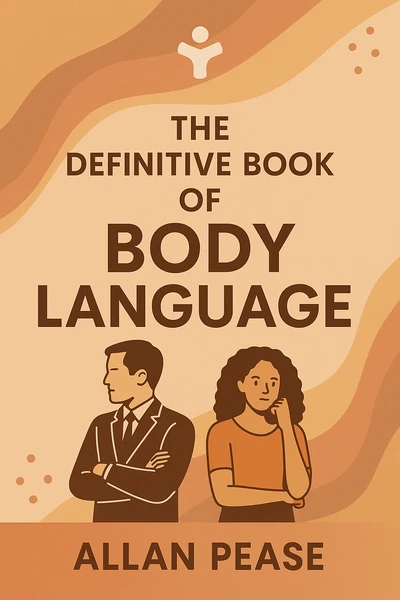
The Definitive Book of Body Language
Ready to Take Action?
Get the Mentorist app and turn insights like these into daily habits.