Stay in motion with simple exercise to spark insight
You’ve been staring at that blank canvas for an hour—no progress and growing tension. So you stand, push back your chair, and head out the door for ten minutes of fresh air. Down the sidewalk you go, each footfall landing softly on the cracked concrete. The rhythm of your steps energizes your mind. The breeze brushes your cheeks, and you lean into it, eyes scanning leaves brushing against historic brick.
Mid-stride, an idea flutters in: what if that moss-green wall became the exact shade of your next painting’s sky? You turn to look, store the image, and let your mind drift. Your phone is silent in your pocket. You’re unburdened by pings, left only with your breathing and your thoughts. By the time you return to your studio, a phrase has formed in your head—a phrase you didn’t know you needed but now can’t wait to write down.
Neuroscience confirms what artists know: gentle movement in natural settings relaxes the prefrontal cortex, boosting default-mode activity—the creative network in your brain. Those “aha” moments often arrive mid-walk, not mid-worksheet. Small steps, silent phone, single-focus wandering—this is how you stop forcing your muse and start letting her wander in. The path is your invitation, so lace up your shoes and let your mind roam free.
Tomorrow morning, pause after breakfast and step outside for ten minutes—phones off. Focus on the cadence of your stride, the air against your face, and let your thoughts drift. When something clicks—a color shift, a new metaphor—jot it down. Repeat this at lunch and mid-afternoon. Before long, you’ll discover that your best ideas don’t come at your desk but along the garden path. Give it a try, and watch the insights multiply.
What You'll Achieve
You will harness the mind-body connection to unlock fresh insights and reduce mental blocks. Expect heightened problem solving and a steady stream of spontaneous creative ideas.
Move your body to free your mind
Schedule three daily mini-walks
Set recurring 10-minute reminders at different times—pre-work, lunch, late afternoon—and step outside. Focus on your breath and the rhythm of your footfalls.
Switch off tech during movement
Leave your phone behind or on do-not-disturb. Allow your mind to wander without digital interruptions, giving room for new ideas to surface.
Notice the first mental shift
After each walk, jot down any fresh thoughts or solutions that arose. Even small sparks—an image, a phrase—can become the seed of your next creative burst.
Build weekly distance goals
Use a simple pedometer or app to track your steps. Aim for gradual increases—100 extra steps per walk—to turn movement into a habit.
Reflection Questions
- What do I notice first during my next walk?
- How does stepping away from my desk change my perspective?
- What idea surfaced today that wouldn’t have in my chair?
- How can I protect my tech-free walking times?
Personalization Tips
- In writing: A journalist walks her block three times a day, logging story angles during each loop.
- In coding: A software engineer takes five-minute strolls to shake out ideas on a persistent bug.
- In music: A composer paces a small garden path while humming chord progressions until the melody solidifies.
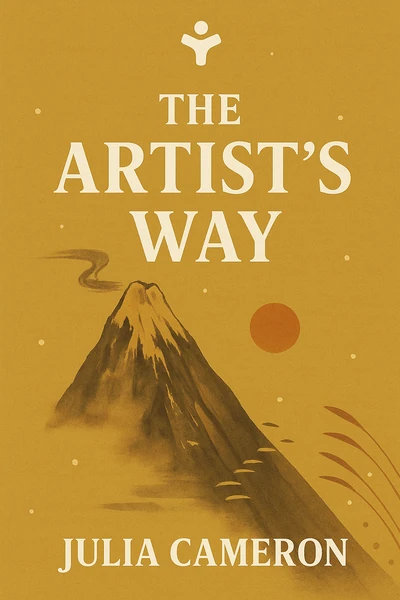
The Artist's Way: A Spiritual Path to Higher Creativity
Ready to Take Action?
Get the Mentorist app and turn insights like these into daily habits.