Embrace the growth mindset to turn every challenge into progress
When Carol Dweck first interviewed students about their failures, she noticed two very different mindsets. One group saw mistakes as proof that they weren’t smart. The other treated errors like stepping stones to success. I remember watching a fierce eighth‐grader slam his science fair clay volcano when it collapsed—and hours later, he was sketching a better design in his notebook. He wasn’t a genius, but he celebrated the lesson.
In another study, kids who were told “problems here will help you learn” attacked hard puzzles with gusto. Those told they were being judged on smarts wilted at the first sign of difficulty—and then struggled with easy questions they once solved. It wasn’t IQ that made the difference; it was belief in the power of effort.
When I learned this, I experimented by praising my own process: “I nailed that presentation because I rehearsed that introduction ten times.” Gradually, I stopped fearing the small mistakes that once derailed me. My corner‐office projects improved, my chess tactics became sharper, and even my kids learned to ask, “Is this just a speed bump or a roadblock?”
It turns out that the brain builds new pathways every time we stretch ourselves. Seeing effort as the bridge to ability rewires our minds. That simple shift from “I’m or I’m not” to “Not yet” can rewrite your long-term game plan.
When you notice that self-defeating voice, stop and jot down your first thought. Then classify it—is this an opportunity to learn or a dead-end judgment? Reframe every setback as a mini-experiment—ask “What worked? What’s next?” and jot your answers. At week’s end, tally each moment you chose effort over doubt, and celebrate how those choices moved you forward.
What You'll Achieve
You’ll cultivate resilience to setbacks and a hunger for challenges, leading to sustained progress and more confident decision-making in work and life.
Spot and shift fixed mindset traps
Note your instant reactions
The next time you face a difficulty, pause and write down the first thought that crosses your mind. Are you blaming yourself or seeing a chance to learn?
Reframe setbacks as experiments
Whenever you fail at something small, ask yourself what to try differently next time. State, “I got this because I experimented. Next step…”.
Set weekly learning goals
List three specific skills or concepts you want to improve this week. For instance, ask for feedback on one project at work or practice an extra chess endgame every day.
Celebrate incremental gains
At day’s end, note one small win. It could be ‘I asked a clarifying question in a meeting’ or ‘I stayed calm under stress.’ Recognize how effort paid off.
Reflection Questions
- When did you last blame yourself for a mistake instead of extracting a lesson?
- What one skill could you reframe as a ‘Not yet’ rather than a fixed limitation?
- How can you celebrate small wins each day to reinforce your growth mindset?
- What would change if every obstacle became your next research question?
Personalization Tips
- At work, you pause after a tough client call and note what you learned instead of blaming yourself.
- On the basketball court, when a shot misses, you treat it as data and adjust your stance for the next attempt.
- As a parent, you teach your child to say, “I haven’t got it yet,” instead of “I’m no good at this.”
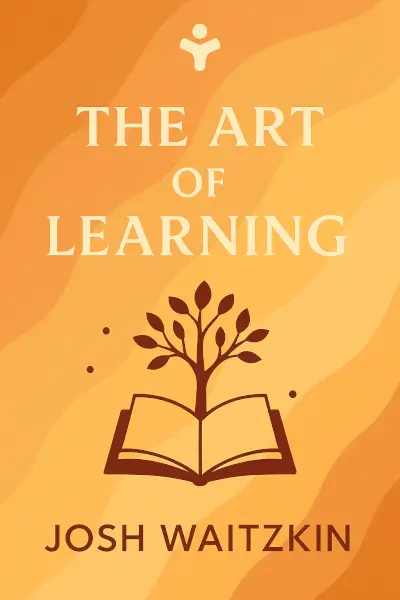
The Art of Learning: A Journey in the Pursuit of Excellence
Ready to Take Action?
Get the Mentorist app and turn insights like these into daily habits.