Procrastination isn’t laziness, it’s stress relief—treat the cause, not the symptom
Most people think procrastination is a time‑management problem. It isn’t. It’s a mood‑management strategy. When life pressures pile up—money, conflict, uncertainty—your brain looks for quick relief. Avoiding the task gives a small hit of comfort and a dose of dopamine, so the habit sticks. Later the work remains, and the stress is larger. That’s why you can care about the work and still avoid it.
Here’s a different loop. Start with self‑forgiveness. Students who forgave themselves for earlier delays were less likely to procrastinate on the next exam. It quiets shame so your brain doesn’t treat the task like a threat. Then recruit your Future You. When people can vividly picture themselves later in time, they make wiser choices now—like saving money or starting earlier—because the future feels closer and more personal.
Then get surgical with the start. A fifteen‑minute timer is small enough to slip under fear’s radar. One graduate student wrote a single paragraph inside a fifteen‑minute box, closed the laptop, and took two deep breaths by the window as a reward. She repeated it twice more that afternoon. “I might be wrong, but it turns out starting is the whole game,” she said.
This approach weaves several solid findings. Procrastination is tied to stress relief, not laziness. Self‑forgiveness reduces negative affect that keeps the cycle going. Vivid future self‑imagery increases long‑term choices. And starting rituals plus time boxes exploit the progress principle—once you begin and see progress, motivation rises. Address the stress and the work follows.
Say the words and clear the slate: “I forgive myself for avoiding this,” then ask your Future You what first tiny step broke the stall. Count 5‑4‑3‑2‑1, set a fifteen‑minute timer, and do only that bite. When it dings, take your planned stress soother, not a scroll, and decide whether to run another round. You’re not fixing the whole project today, you’re repairing the loop. Try one round this afternoon.
What You'll Achieve
Lower shame and anxiety around hard tasks, more frequent starts, and steady progress in short bursts. Internally, you’ll feel calmer and more in control. Externally, you’ll reduce missed deadlines and chip away at big work consistently.
Forgive, futurecast, and just start
Forgive the last delay out loud
Say, “I forgive myself for avoiding X.” Self‑forgiveness reduces shame, which fuels more avoidance.
Ask your Future You for advice
Picture yourself three months ahead having finished the work. Ask, “What tiny step did I start with?” Write the answer down.
Start for fifteen minutes with a timer
Count down and work only on the smallest chunk. Permission to stop reduces anxiety and gets you moving.
Use one stress soother, not a scroll
Before you begin, plan a healthy micro‑break you’ll use after the 15 minutes: short walk, water, stretch, two deep breaths.
Reflection Questions
- What stress are you really soothing when you delay this task?
- What would your Future You thank you for starting today?
- What is a 15‑minute slice you can do without dread?
- What healthy micro‑break will you use instead of a scroll?
Personalization Tips
- Business: Fifteen focused minutes in the messy spreadsheet, then a walk to refill water.
- Home: Set a timer and open one box in the garage, then stretch for a minute.
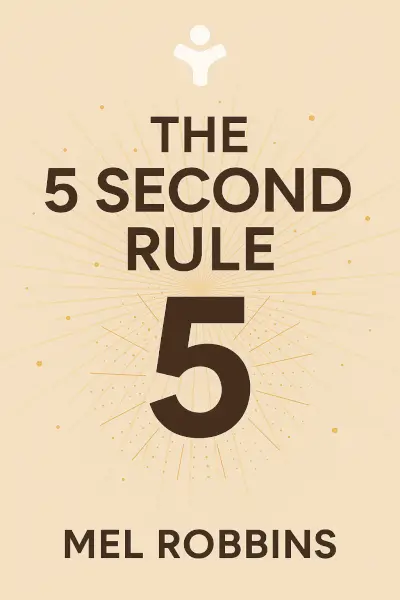
The 5 Second Rule: Transform Your Life, Work, and Confidence with Everyday Courage
Ready to Take Action?
Get the Mentorist app and turn insights like these into daily habits.