Measure What Matters for Clear Transformation
Samantha, a marketing director, spent months kicking off fancy fitness apps and diet regimes, but never saw her jeans budge. Frustrated, she’d hop on the scale every morning only to bounce between two numbers—discouragement followed by more new launches. Then, she tried setting up her “Physical GPS.” She measured her waist, hips, and thighs with a simple tape measure—locked at the navel, the widest hip point, and mid-thigh—and totaled those inches. Every Saturday at 8 a.m., after a glass of water, she took those same four measurements in identical clothes. Within three weeks, her total inches dropped by three points, hard evidence that her slow-carb lunches were finally kicking in. The scale stayed stubborn, but her GPS never lied: inch by inch, she reclaimed her body. Soon, she replaced daily chaos with simple, reliable tracking. Momentum built, determined by actual curves on a tape, not a noisy app or whim. Business leaders call this OKR—Objectives and Key Results—but its fitness twin is equally powerful: if you can measure it, you manage it. With clear data, Samantha exchanged frustration for progress, one precise check-in at a time.
You don’t need complicated labs—just a cheap tape measure and some calendar reminders. Every week, after your morning routine, measure biceps, waist, hips, and thighs, then sum those inches for your Total Inches score. Log it in a notebook or spreadsheet and compare. Over time you’ll see unshakeable proof of progress, even when the scale stalls. That’s your Physical GPS—unclouded data that guides your next steps.
What You'll Achieve
You’ll replace uncertainty and discouragement with precise, motivating data that keeps you committed. Externally, you’ll watch literal inches disappear and celebrate tiny victories that fuel bigger wins.
Set Up Your Physical GPS
Choose your key metrics
Decide if you’ll track bodyfat percentage with a reliable tool like BodPod or the ultrasound probe, or total body measurements with a tape measure. Pick the one you can commit to.
Take precise baselines
First thing in the morning after voiding, record your weight (if you must), but more importantly, measure circumference at biceps, waist, hips, and thighs. Total these for your Total Inches score.
Schedule consistent check-ins
Log into your calendar reminders for weekly or biweekly measure days. Always test under the same conditions—same time, hydration level, and clothing.
Avoid treacherous comparisons
Use the same device, method, and calculation each time. Compare apples to apples, not calipers to bio-impedance or different algorithms.
Reflection Questions
- Which single measurement will clearly tell you you’re progressing?
- How can you standardize your conditions to make each check-in reliable?
- What will you do if your Total Inches score stalls next week?
Personalization Tips
- A musician uses weekly audio recordings to track how fast she learns new scales.
- A manager applies monthly NPS surveys with the same question wording to gauge team satisfaction.
- A gardener measures plot yield per square foot every harvest to optimize plant rotation.
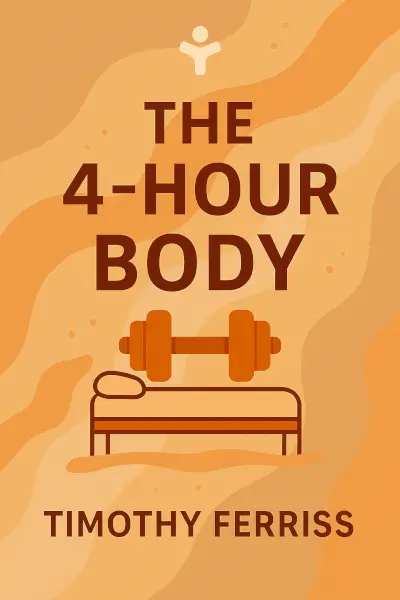
The 4-Hour Body: An Uncommon Guide to Rapid Fat-Loss, Incredible Sex, and Becoming Superhuman
Ready to Take Action?
Get the Mentorist app and turn insights like these into daily habits.