Who Are You Beyond the Voice and the Body
From ancients like Socrates to modern mindfulness teachers, scholars have wrestled with the core question: who am I, really? We grab onto everything—names, careers, even thoughts themselves—to build a solid sense of self. Yet each label is borrowed: a job title is earned, then lost; a family role shifts; opinions morph. None passes the ‘perception test’—you observe them from the outside—nor the ‘permanence test’—they all change.
Descartes famously declared ‘I think, therefore I am,’ but neuroscience now shows thought is a brain process you observe, not the observer itself. Your truest self is the one doing the observing, untouched by the shifting details. It’s like the sky: clouds pass, storms come and go, but the sky remains. Your real self is that sky—unbound, unfiltered, timeless.
Eastern and Western philosophies converge on this insight. In quantum physics, too, the observer plays a role in how reality appears, hinting that ‘you’ are more than a collection of parts. Realising this dissolves fear and dissatisfaction. When you stop mistaking labels for your identity, you gift yourself the freedom to respond to life rather than react to an ego script.
You start by jotting down every mask you wear—titles, labels, roles—and then apply two simple tests: can you see it directly, and does it stay the same? When the masks fail those tests, gently remove them. What’s left is the observer—your constant self. Hold onto that, and you’ll discover a calm, unshakeable centre, no matter which mask you choose to wear. Try it during your next reflection break.
What You'll Achieve
Internally, you’ll experience deep self-acceptance and reduced anxiety from societal pressures. Externally, you’ll make choices aligned with your true self, improving confidence and authenticity in relationships.
Strip off identity masks gently
List your roles
Spend five minutes writing down every identity you’ve assumed—job titles, family roles, labels like ‘shy’ or ‘curious.’
Ask the two tests
For each role, ask ‘Can I see myself’ and ‘Does it change?’ If you can’t observe it directly or it changes (student→teacher), it’s a mask not you.
Name the real you
After peeling off every role that fails the tests, write down the one constant: the quiet you who observes. Honour that observer each morning.
Reflection Questions
- Which three roles do I cling to most, and why?
- Can I name a constant ‘observer’ beneath those roles?
- How would I act differently if I focused on the observer instead of the roles?
Personalization Tips
- At work, recall you’re not the ‘manager’ but the smart observer solving problems.
- With friends, remind yourself you’re not ‘the funny one’ or ‘the listener’ but the genuine you.
- During stress, recall you’re not ‘the victim’ or ‘the hero’ but the self beyond labels.
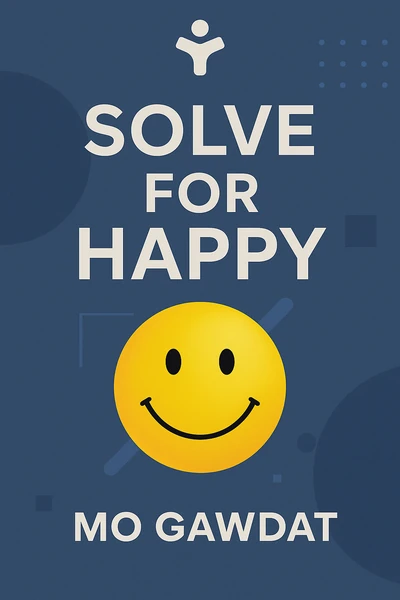
Solve for Happy: Engineer Your Path to Joy
Ready to Take Action?
Get the Mentorist app and turn insights like these into daily habits.