You actually have two brains secretly making separate decisions
If you’ve ever wondered why you lose your cool in a flash but find it impossible to stick with a diet, it’s because you’re dealing with not one but two decision-makers in your skull. The automatic self is lightning-fast—it swipes the cookie or snaps back at a coworker the moment you’re stressed. Meanwhile, your conscious self is more like a neighborhood watch captain, only able to focus on one issue at a time. When the automatic self fires off a knee-jerk reaction—hello, potato chips—you’re left scrambling to rein it in.
Think of your brain as a two-person team, each with its own personality. The automatic self carries the emotional baggage of every past experience, biases, and reflexes etched into its circuits. It acts on impulse. Your conscious self, by contrast, is the slow-thinking professor—always weighing the pros and cons, checking facts, and planning ahead. It’s in charge only when you deliberately hand over control, which usually doesn’t happen until after the impulse has had its way.
The mismatch between these systems explains so many familiar misfires: the argument you regret, the gym day you skip, the midnight binge, the project you postpone. You know better—your conscious mind is painfully aware of your goals—but the automatic self runs on its own autopilot. The key to real change is to train the automatic self, creating new “default” circuits that support your conscious intentions. That way, good habits become nearly effortless.
Neuroscience gives us hope: neural pathways change with practice. Every time you pause before snacking, hold back from a sarcastic retort, or choose water over soda, you’re rewiring your brain. Practice mindfully, and those new circuits grow stronger—until you hardly notice the effort anymore. Understanding you have two minds and learning to make them cooperate is the foundational insight for conquering self-destructive behavior.
Imagine you’re coaching yourself through a tricky moment. You feel the urge to text at red lights; you gently slow your breath and put your phone face-down. You name the impulse—“automatic urge”—and smile inwardly at it, acknowledging its history. Then you remind yourself—“conscious decision”—why staying present at the wheel matters. Those two small rituals smooth out the conflict between your fast autopilot and your thoughtful pilot, until shifting gears without checking the phone becomes almost automatic. Give it a try the next time your impulses pull you off course.
What You'll Achieve
You’ll develop self-awareness of conflicting urges and learn to pause impulsive reactions, enabling you to build new neural pathways that support deliberate, goal-aligned actions.
Map your automatic versus conscious choices
List your quick reactions
Spend five minutes writing every automatic reaction you notice today—angry snap, impulse snack, procrastination—without overthinking. This builds awareness of your automatic self in action.
Journal your slow decisions
Next, write your deliberate choices—planning your day, resolving a conflict, setting goals—and note how long you paused before acting. This highlights your conscious self’s role.
Compare and contrast
Place the two lists side by side. Reflect on patterns where your quick reactions conflict with your deliberate intentions. Spot one habit you want to rewire.
Pick one habit to rewire
Choose a routine conflict—say, snacking when stressed—and decide on a new response. Commit to practicing it for two weeks, noting triggers and results.
Reflection Questions
- When did you last act on impulse despite knowing a better choice?
- What are the top three situations where your automatic self undermines your goals?
- How often do you deliberately pause before making a choice?
- What new, healthier habit could you practice in place of one destructive impulse?
- What small reminder could you set up to cue your conscious self in high-temptation moments?
Personalization Tips
- At work, note how you instinctively reply to a critical email versus how you’d craft a thoughtful answer if you paused.
- When you feel a sugar craving, deliberately sip water or go for a two-minute walk first.
- If you catch yourself interrupting a friend, pause and count to three before replying to show you’re listening.
- During study time, replace the instinctive YouTube break with a five-minute focused task block.
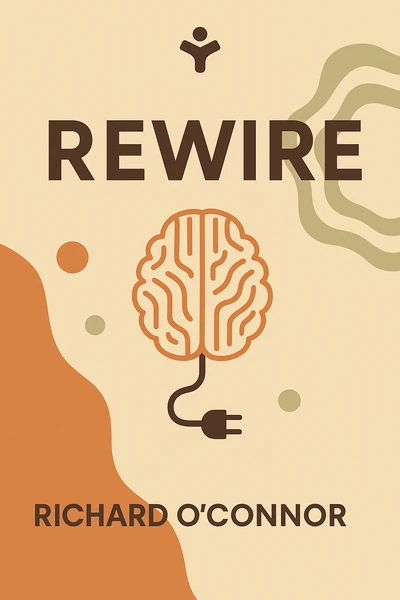
Rewire: Change Your Brain to Break Bad Habits, Overcome Addictions, Conquer Self-Destructive Behavior
Ready to Take Action?
Get the Mentorist app and turn insights like these into daily habits.