Speak to Head and Heart to Win Support
Aristotle taught orators over two millennia ago that persuasion relies on ethos (credibility), pathos (emotion), and logos (logic). In modern talks, we often lean too heavily on logos—slides packed with data—while neglecting the heart. Randy Olson later described four “organs” of communication: head, heart, gut, and groin. Each organ represents a way we engage: reason, feeling, instinct, and raw passion.
Imagine a lecture hall where a scientist rattles off gene-editing breakthroughs from the stage, only to see attendees checking their watches. Then picture the same facts wrapped in a story of a patient whose life was saved—attendees hang on every word. The head organ processes the data, but the heart and gut compel action.
The secret is integration. You might open with a brief confession—a human moment that reveals vulnerability—then pivot to bullet-proof evidence. When you alternate like this, listeners trust your credibility and feel invested in your message. They think, “This makes sense, and it matters to me.”
Balancing these organs takes practice, but it pays off. You’ll build authority without sacrificing warmth, turning curious listeners into committed partners.
Start by listing your key proofs and an emotional story that illustrates each. Then open with a value you share—integrity, community, creativity. Alternate slides so data leads into a narrative moment, and watch the audience’s energy rise. Keep an eye on their reactions and adjust if one style dominates. This balance will deepen trust and make your message unforgettable.
What You'll Achieve
You’ll cultivate both credibility and connection, fostering trust and commitment. Externally, your arguments will land more persuasively, leading to faster buy-in and collaboration.
Balance Logic with Emotional Hooks
Catalog your data and proofs
List the charts, stats, or expert quotes that give your message authority.
Find an emotional story
Identify a striking personal or third-party anecdote that tugs at empathy or excitement.
Cite shared values
Begin by reminding listeners of a core belief you both hold—integrity, innovation, community.
Alternate analytic and affective slides
Follow a technical slide with an emotive image or brief narrative to reset focus.
Solicit immediate feedback
Watch for nods or furrowed brows, and adjust the mix on the fly if one style dominates.
Reflection Questions
- What shared value can you name at your next opening?
- Which proof needs a human story to make it resonate?
- How will you check in on audience energy to rebalance logic and emotion?
Personalization Tips
- A nonprofit mixes impact statistics with a beneficiary’s personal story in every board report.
- A product manager follows each spec sheet with a customer video testimonial.
- A keynote speaker alternates deep dive slides with a brief, heartfelt anecdote about their own failure and recovery.
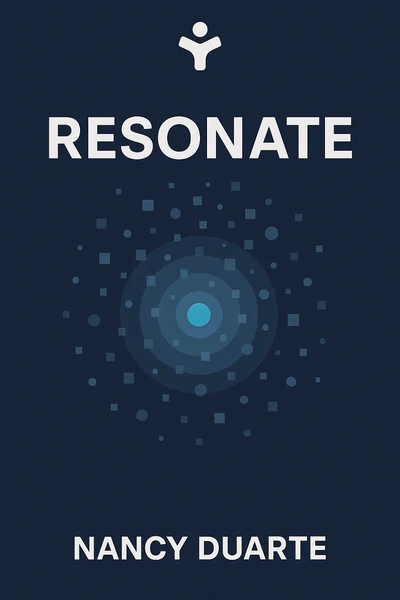
Resonate: Present Visual Stories that Transform Audiences
Ready to Take Action?
Get the Mentorist app and turn insights like these into daily habits.