Unlock Your Presentation’s Hidden Story Power
Every day, audiences wade through slide decks heavy on bullet points and statistics. Their eyes glaze as rows of numbers tumble by. But when you slip in a story—say, how a small startup founder turned a $1,000 investment into a thriving business—those same listeners sit up and lean in. You see, the brain processes narrative differently from raw data. Stories light up the emotional centers first, and that emotional engagement makes facts stick.
In practice, this means mapping your outline so that each key statistic has a human face. Imagine describing a 30% productivity jump and immediately cutting to a scene where an exhausted team member celebrates finishing a project early. The contrast between a metric and a moment helps the audience feel the significance rather than compute it.
This blend of analytical and narrative isn’t a gimmick. It’s rooted in neuroscience: storytelling triggers dopamine, making listeners more receptive to learning. Data alone can feel dry; stories light the spark that keeps your audience awake and eager.
When you merge facts with narrative, your presentation gains a pulse. It becomes less like a lecture and more like a journey, one where people willingly follow alongside. That’s how you transform information into inspiration.
Now imagine you’re at your desk, sketching your next talk. First, grab your top three data points and write them down. Next, brainstorm a brief story for each—maybe a personal win, a customer quote, or a vivid scene you once witnessed. Then lay them out in alternating order so your audience never drowns in statistics. Finally, rehearse shifting between the two until it flows like a conversation. Practicing these transitions will make every slide resonate more deeply. Give it a try tonight.
What You'll Achieve
You’ll shift your mindset from lecturing to storytelling, forging an emotional connection that boosts retention. In practice, you’ll deliver talks that audiences remember and act on, leading to clearer decision-making and faster buy-ins.
Blend Facts with Narrative Moments
Gather your key data points
List the three most crucial facts you must convey—sales figures, survey results, milestone achievements. This forms your informational backbone.
Identify a relevant anecdote
Choose a personal or audience-centered story that parallels each fact. For example, describe a student who mastered a concept after seeing it in a story.
Alternate story and data
Sketch a simple outline alternating between fact and story. This keeps listeners curious about what’s next.
Practice your transitions
Rehearse the shift from data to story until it feels natural. Note where you can pause or change tone to heighten impact.
Reflection Questions
- Which key fact in your next talk could benefit from a story?
- What personal or audience anecdote naturally accompanies that fact?
- How can you pace your shift between data and story to keep energy high?
Personalization Tips
- At work, a project manager describes budget overruns, then tells how a team rallied when they saw a customer testimonial.
- A fitness coach lists injury stats and follows with a personal recovery story that motivates trainees.
- A teacher shares test-score trends and then recounts how one student’s breakthrough came after a real-world metaphor.
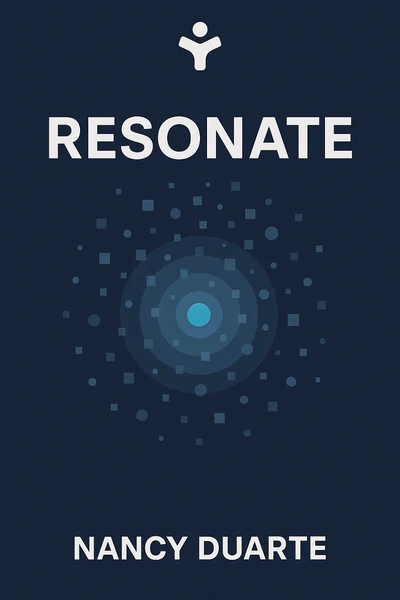
Resonate: Present Visual Stories that Transform Audiences
Ready to Take Action?
Get the Mentorist app and turn insights like these into daily habits.