True expertise blooms from both depth and wide exploration
At 3M in the 1970s, specialists in adhesives, tapes, and polymers thrived independently—and often solved problems through brute-force expertise. But occasional breakthroughs came from an engineer who knew just enough chemistry, optics, and manufacturing to connect dots no one else saw. That lateral thinker was often more successful than a singular expert in any one domain. Years later, researchers found that inventors with both a T-shaped profile—deep in one area, broad across many—accounted for a disproportionate share of the company’s most impactful patents.
Imagine Sara, a product manager at a SaaS startup. She’s a wizard at customer analytics, but notices UX bottlenecks slowing adoption. Instead of outsourcing UX, she signs up for a quick design thinking workshop and teams up with a UX lead for a sprint. Suddenly, her analytics know-how combined with design insights sparks a feature pivot that doubles trial conversions. That blend of depth in data and breadth in design made her the go-to innovator.
In contrast, specialists who double downed on analytics alone saw incremental gains but rarely breakthrough wins. The lesson is clear: deep expertise gets you to a point, but without adjacent skills, you run out of fresh ideas. By sampling related domains and weaving them into your core work, you become a polymathic problem solver, ready for high-uncertainty projects that demand fresh perspectives.
You’ve mapped your T shape—one deep skill and surrounding domains. Now act. Block a quarterly calendar slot for each adjacent skill: a two-hour workshop, a tech tutorial, or a mentoring chat. Keep checklists of how each new domain shifts your approach to your deep skill and share lessons learned with colleagues. This structured breadth will turn you into the innovator who thrives where high uncertainty meets big opportunity.
What You'll Achieve
You’ll build the confidence to bridge ideas across disciplines, boosting creative problem solving. Measurably, you’ll deliver more breakthrough projects, faster pivots, and wider recognition for cross-functional leadership.
Grow Your T-Shaped Superpower
List your core skill domain
Write down the one area where you’re strongest, such as financial modeling or guitar playing. Rank your confidence on a scale of 1–10.
Inventory six adjacent skills
Brainstorm related abilities—like data visualization for financial modeling, or songwriting for guitarists—that share some overlap. Aim for domains that push you outside day-to-day comfort zones.
Plan quarterly skill hops
For each adjacent skill, schedule a short workshop, mentorship call, or mini-course. Track progress over three months, then reflect on how that new skill informs your core expertise.
Reflection Questions
- Which adjacent skill excites you most, and why?
- How will you measure its impact on your core work?
- What’s one project that could benefit immediately from an outside perspective?
- Who in your network could mentor you through your next skill hop?
- How can you showcase your growing T-shape to your team?
Personalization Tips
- Business: An accountant learns storytelling to pitch financial reports more compellingly.
- Health: A yoga instructor picks up nutrition basics for better client meal planning.
- Career: A teacher explores project management tools to streamline curriculum design.
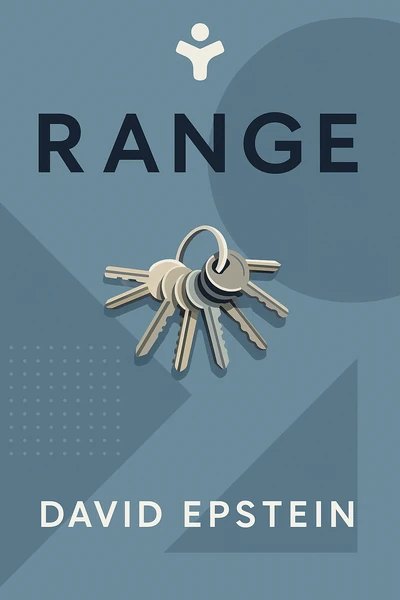
Range: Why Generalists Triumph in a Specialized World
Ready to Take Action?
Get the Mentorist app and turn insights like these into daily habits.