Stop chasing outcomes to go farther with aimless, present work
Productivity culture says more planning, more pushing, more optimizing will save us. But a nervous system stuck in chase mode narrows attention, fuels anxiety, and ironically lowers performance. The counter‑move is aimlessness, the art of stopping without needing to get somewhere. Two minutes of this can change the texture of an hour. Sit, breathe, and let your body register that nothing is demanded right now.
A student tried this before physics homework. Instead of doom‑scrolling, he sat with his feet on the floor, repeated “Don’t just do something, sit here,” and felt his breath steady. When he opened the book, the first problem didn’t bounce off his skull like usual. A designer did the same between back‑to‑backs and noticed she stopped opening three apps reflexively. Her next meeting started with a clearer agenda and fewer words.
Why does stopping help? Attention science shows that perceptual narrowing under stress reduces creativity and working memory. Parasympathetic activation from slow breaths and present‑moment savoring widens the cognitive field. Barbara Fredrickson’s broaden‑and‑build theory explains how brief positive states increase flexibility and resourcefulness. In athletic contexts, coaches know that over‑striving tightens muscles and degrades form; relaxed attention often improves accuracy and speed.
Aimlessness is not laziness, it is strategic recovery and contact with life as it is. When you practice a daily two‑minute stop, you’re training your mind to be here, not living only for the next checkmark. Paradoxically, work done from this state is often faster, cleaner, and kinder.
Pick one reliable pause in your day and spend two minutes doing nothing but feeling your breath and your body, repeating “Don’t just do something, sit here.” Let your eyes rest on one simple, pleasant thing—a warm mug or a patch of light—and savor that non‑toothache feeling for a few breaths. When the timer ends, carry this calmer attention into the very next task, resisting the urge to check three apps before you begin. Start small, keep it daily, and watch how much cleaner your next actions become. Try it before lunch today.
What You'll Achieve
Internally, you’ll reduce chase‑mode stress and recover a wider, steadier attention. Externally, you’ll start tasks with more clarity, make fewer errors, and finish with less decision fatigue.
Insert daily two‑minute full stop
Pick one ‘do nothing’ window.
Choose a guaranteed moment—before lunch or between meetings—to sit or stand still for two minutes with no goal except noticing breath and body.
Name the habit to yourself.
Silently repeat, “Don’t just do something, sit here.” Let this phrase interrupt the compulsion to optimize every second.
Savor a non‑toothache.
Notice something already okay—a steady breath, quiet room, warm mug. Let appreciation land for ten seconds.
Return gently to work.
Carry the calmer state into the next task. Resist checking three apps before you start; begin the single next action.
Reflection Questions
- What two‑minute window can you reliably protect each day?
- Which phrase helps you remember to stop?
- What non‑toothache can you savor right now?
- How does your next task feel after a full stop?
Personalization Tips
- Studying: Two minutes of aimless breathing before opening the textbook to settle attention.
- Sports: Take a full stop between drills to feel feet and breath, then resume with softer effort.
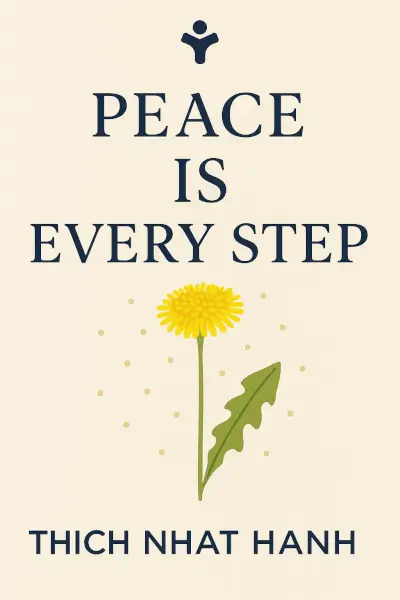
Peace Is Every Step: The Path of Mindfulness in Everyday Life
Ready to Take Action?
Get the Mentorist app and turn insights like these into daily habits.