Walk like you are kissing the earth to steady mind and body
You step outside and notice the air is cool against your cheeks. For ten minutes you decide to walk as if the only job is walking. Three steps to inhale, three to exhale. Your toes feel the give of the ground through your shoes, and your hands stop clenching. A cyclist rattles by, and instead of jumping, you ride the wave of sound with your breath.
Halfway down the block, a maple leaf hangs by a thin stem, the red almost glowing. You let your steps pause, keep breathing, and really look. Two kids pass, arguing about a goalie save, and their voices fade into the background hum. A small story plays in your head, then drifts off as the rhythm returns. By the corner, your thoughts are still there, but not driving.
Later, in a busy corridor, you try the same rhythm for just one length of the hallway. It’s the same body, the same breath, a different place. Your phone vibrates once in your pocket, and you finish the exhale before checking it. That tiny choice feels like a small victory.
Coordinating steps and breath works because it recruits sensory anchors and rhythmic respiration to regulate attention and arousal. The predictable pattern acts like metronome training for your nervous system, nudging it from scattered to steady. Sensory noticing increases interoception—awareness of your body’s signals—which is linked to better emotion regulation. A few minutes a day builds the skill so you can use it anywhere you walk.
Pick a short, safe path and decide to walk a little slower for five to ten minutes. Try matching three steps to each inhale and three to each exhale, adjusting the count to what feels natural, and silently label the breath as you go. Keep attention in your feet—the heel, arch, and toes meeting the ground—and let your hands and jaw soften. When something beautiful pulls you to stop, stay with your breath while you look, then return to your rhythm. Finish the route before checking your phone and notice how your mind feels at the end. Give it a quick try after work.
What You'll Achieve
Internally, you’ll experience a calmer, steadier mind and less muscle tension. Externally, you’ll transition between tasks more smoothly and arrive at the next activity less reactive and more focused.
Sync steps and breath outdoors today
Choose a short path.
Pick a safe route—a block, a hallway, or a park loop. Decide to walk slightly slower than usual for 5–10 minutes.
Match steps to breathing.
Try three steps per inhale and three per exhale. Adjust to your lungs—two or four steps is fine. Silently say “in, in, in… out, out, out.”
Feel your feet fully.
Notice heel, arch, toes, and the ground’s texture. Imagine leaving a gentle imprint of calm with each step. Relax your hands and jaw.
Stop for beauty without leaving the breath.
If a tree or child catches your eye, pause and keep breathing as you look. Then resume walking with the rhythm you set.
Reflection Questions
- What route could become your 10‑minute walking loop?
- Which step‑to‑breath count feels most natural to your lungs?
- How does your body feel after two minutes of attention in your feet?
- When do you most need a walking reset—before work, after school, or at night?
Personalization Tips
- Commute: Walk from the bus stop to your door in this rhythm to decompress.
- School: Do one mindful lap of the hallway between classes to reset focus.
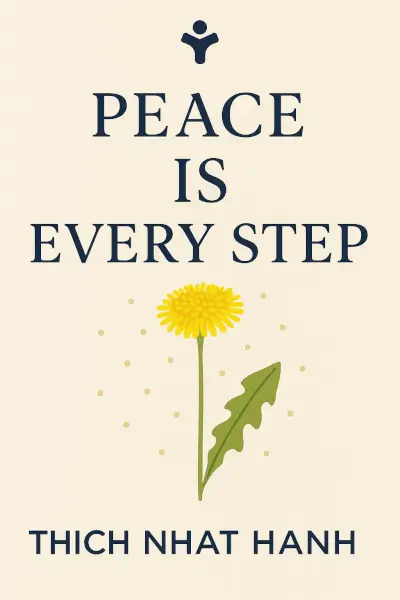
Peace Is Every Step: The Path of Mindfulness in Everyday Life
Ready to Take Action?
Get the Mentorist app and turn insights like these into daily habits.