Turn everyday pings and sights into instant mindfulness resets
Your phone buzzes, and it’s like a small electricity in your chest. Without thinking, your thumb is already moving. Today, you decide to interrupt that script. The next ping lands and you stay still, eyes soft, counting three slow breaths. On the first exhale, your shoulders drop. By the third, your jaw unhooks and the heat in your face cools a few degrees. You answer, but now your voice is steadier, a little kinder.
The same practice carries to the crosswalk. The red hand blinks, and you feel the urge to dart across anyway. Instead, you feel your feet inside your shoes and the air against your cheek. A half‑smile sneaks in. Someone next to you exhales too, as if they caught your calm. On the bus, a child laughs, and the sound lands like a bell. Three breaths again. Your coffee has turned lukewarm, but somehow that’s okay.
Late afternoon, a colleague’s email feels sharp. The old habit is to react. You pause for your pre‑selected cue—the click of the mouse. Inhale “calm body,” exhale “soften face.” You draft a clearer, shorter reply and decide to ask a question rather than argue a point. Two minutes later they respond with more context, and the knot loosens. I might be wrong, but it seems the simple pause saved an hour of back‑and‑forth.
This practice works because cues become conditioned prompts for regulation. Breath lengthens the exhale, nudging the vagus nerve and downshifting arousal. A soft smile relaxes facial musculature and feeds a safety signal back to the brain. Over time, you’re building a habit loop: cue, mindful breath, calmer response. The more you repeat it, the faster your system remembers how to settle.
Pick three everyday cues you already encounter—a phone ping, a door opening, sunlight on your desk—and decide they will trigger a pause. At each cue, take three slow breaths, silently saying “calm body” on the inhale and “soften face” on the exhale while adding a gentle half‑smile. Let the phone ring twice as your built‑in timer, then answer on the third ring, and treat red lights as friendly reminders to come back to your hands on the wheel and the breath in your belly. Keep it light, no perfection needed, just repeat these tiny resets whenever your bell sounds. Give it a try tonight.
What You'll Achieve
Internally, you’ll feel calmer and more present under pressure. Externally, you’ll respond more thoughtfully to messages, drive and commute with less tension, and reduce impulsive reactions that waste time and strain relationships.
Program three personal bells today
Pick three daily cues.
Choose common triggers—a text ping, a door opening, sunlight on your desk. Decide that each one means pause and notice your breath. Make them realistic so you’ll actually encounter them several times a day.
Practice the three‑breath rule.
At each cue, stop for three slow breaths. On the inhale, silently say “calm body.” On the exhale, “soften face.” Let shoulders drop and unclench your jaw. This takes about 20 seconds.
Add a gentle half‑smile.
As you exhale, lift a soft smile to relax facial muscles and signal safety to your nervous system. If smiling feels forced, simply relax the mouth corners and soften the eyes.
Extend to calls and red lights.
Let the phone ring twice as your cue, then answer on the third ring with a steadier voice. At stoplights, breathe in “here,” breathe out “now,” and feel the steering wheel in your hands.
Reflection Questions
- Which three cues naturally repeat in your day that could become bells?
- How does your face and body feel after three breaths compared to before?
- Where do you still rush or react, and what cue could you link there?
- Who around you benefits when your tone is 10% calmer?
Personalization Tips
- Work: Use calendar pop‑ups as bells; take three breaths before unmuting in meetings.
- Parenting: When you hear “Mom/Dad,” pause for one breath so your tone is warm, not rushed.
- Health: Each time your fitness watch buzzes, stretch your neck, relax your jaw, and breathe.
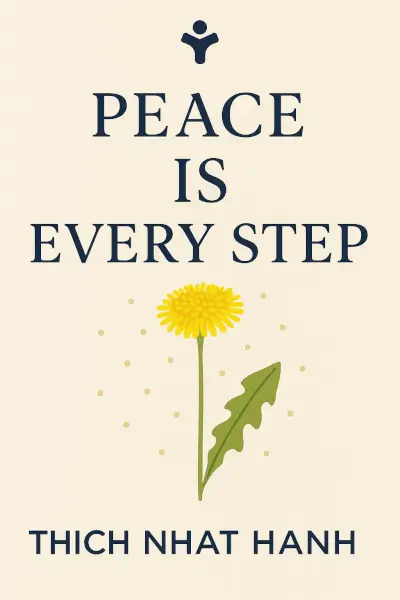
Peace Is Every Step: The Path of Mindfulness in Everyday Life
Ready to Take Action?
Get the Mentorist app and turn insights like these into daily habits.