Turn Your Mess into Small Wins with Five-Step Decluttering
One Saturday, I decided to declutter my home office drawer. I opened it and expected panic, but instead, I pulled out a candy wrapper—trash gone—then dug out the pen that belonged in my desk caddy. It felt good to see space at every step, not mess building up.
This five-step process is like clearing lanes on a highway. Trash first removes the biggest obstacles. Returning stray items—pens, keys—opens traffic flow. Bagging duh clutter, like outdated chargers, keeps you moving. Two quick questions curb overanalysis, and fitting to your container gives a final boundary.
Research on implementation intentions shows that breaking tasks into small, ordered steps improves follow-through. Each mini-win releases dopamine, fueling momentum. By focusing on one item at a time, you avoid overwhelm and actually finish.
By the time I reached step five, my drawer held only what I needed, and my heart rate had come down. I didn’t end up with piles on my floor—just a neat set of files in my container. That glimpse of control carried me into the kitchen, and suddenly I had energy to tackle another spot.
Start by tossing anything broken or useless into a black bag to see immediate change. Next, return stray items to their logical homes without delay, then bag the obvious giveaways. Hold each remaining item, ask the two quick questions, and either store it or donate it. Finally, group like things and pare back to fit your container. You’ll feel progress at every turn.
What You'll Achieve
You’ll internalize a systematic habit that dissolves overwhelm and externally you’ll enjoy consistently clearer drawers and shelves.
Apply Step-by-Step Decluttering Ritual
Tackle trash first
Grab a trash bag and toss any obvious garbage—wrappers, broken items, and unasked-for papers—so you immediately reduce volume.
Return stray items
Collect anything with a clear home in another part of the house and walk it there now, like that pen in the sock drawer.
Bag duh clutter
Toss or donate the obvious no-brainers—outgrown socks, freebies you’ll never use—without guilt or overthinking.
Ask two quick questions
Hold the item and ask: “Where would I look for this?” and, if unsure, “Would I even remember I own it?” Then act: store or donate.
Fit to your container
Group like items together, then remove extras until the group fits comfortably in its designated spot.
Reflection Questions
- What makes you pause hardest: trash, stray items, or analysis questions?
- Which step feels most empowering and why?
- How can you protect time for another five-step round this week?
Personalization Tips
- A graphic designer clears her desktop folders (trash) and moves unused files to an archive (return stray items).
- A musician drops old sheet music into a donation box after confirming they’d never play it again.
- A parent sorts children’s toys by type, then removes extras to fit one bin per category.
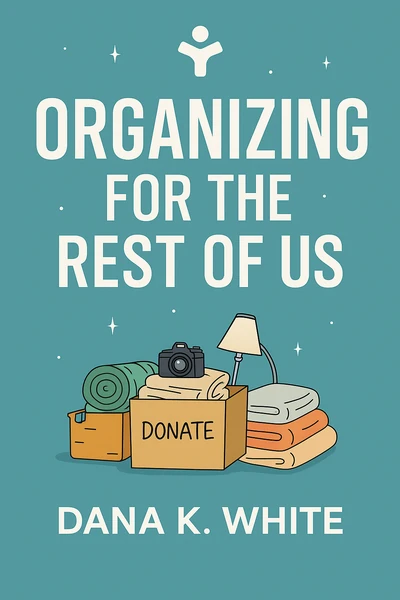
Organizing for the Rest of Us: 100 Realistic Strategies to Keep Any House Under Control
Ready to Take Action?
Get the Mentorist app and turn insights like these into daily habits.