Adopt learning goals to build lasting workout habits
Traditional fitness plans urge us to chase strict goals—run five miles, lose fifteen pounds. Yet research from mindset scholar Carol Dweck reveals another pathway: learning goals. When people focus on mastering new skills rather than hitting rigid targets, their motivation, persistence, and resilience significantly improve.
Imagine you commit to fitting three 10-minute movement breaks into a week, purely to learn how to make exercise fit your busy schedule. You journal each attempt—what street turned out to be the easiest, which time of day you felt most energized, and which obstacles popped up. At the week’s end, you aren’t judged by mileage but by insights you’ve acquired: “I handle early-morning walks best” or “My kitchen countertop makes a great standing desk.”
Education research shows that when learners pursue mastery rather than performance, they view challenges as growth opportunities. They embrace mistakes, analyze strategies, and recover quickly. In fitness, this means you build a toolbox of adaptable Techniques, increasing your confidence to tackle any twist life throws at you.
Adopting learning goals rewires your self-talk—“What can I try this week?” instead of “Did I hit my targets?”—and replaces stress with curiosity. By celebrating each new skill you master, you sow the seeds for lifelong fitness.
Decide on a single, manageable skill—like three 10-minute walks this week—then track your attempts rather than outcomes. After each walk, journal what you learned about timing, routes, or motivation. At week’s end, celebrate the new insight you gained and how it equips you for next steps. Give this learning-focused approach a try to build lasting habits without pressure.
What You'll Achieve
Shift from rigid performance goals to a learning orientation that fosters intrinsic motivation, resilience, and adaptable strategies for sustained physical activity.
Focus on learning instead of perfect targets
Set a one-week learning goal
Choose a single skill to master—like squeezing in three 10-minute walks. Track only your attempts, not the distance or calories.
Journal your experiments
After each session, note what worked or failed: motivation levels, timing issues, or new strategies you discovered.
Reflect on mastery
Identify one technique or insight you gained each week and how it sets you up for the next phase of your fitness journey.
Celebrate progress
Reward yourself for newfound skills—whether it’s a brisker pace or smoother negotiation with your schedule—and reinforce a growth mindset.
Reflection Questions
- What skill in your fitness routine do you most want to master?
- How can you journal insights rather than outcomes?
- What did you learn this week that you can build on next?
Personalization Tips
- A manager might experiment for a month with walking meetings to learn how to blend work and fitness.
- A college student could practice fitting three short study-walks into weekly routines to explore what maximizes retention.
- A hobbyist painter might swap one hour of studio time per week for a yoga class to test new creative perspectives.
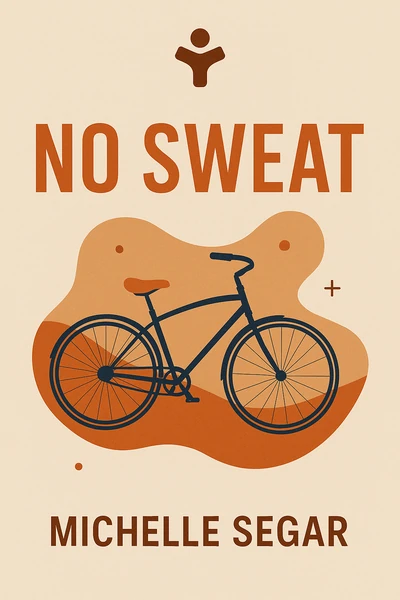
No Sweat: How the Simple Science of Motivation Can Bring You a Lifetime of Fitness
Ready to Take Action?
Get the Mentorist app and turn insights like these into daily habits.