Why Embracing Uncertainty Supercharges Your Growth
You’ve been staring at your phone for ten minutes, scrolling through others’ confident updates, and thinking, "They must know what they’re doing." The buzz of a notification makes the doubt buzz louder in your head. I might be wrong, but maybe no one really does have it all figured out.
In cognitive science, this is called the illusion of knowledge: we see others’ highlights reels and assume they’re experts. Meanwhile, we’re stuck waiting for perfect clarity. But underneath every polished post and canned answer is someone guessing and adapting.
Imagine a YouTuber planning a video series. They draft scripts, scrap them, redo them, and learn tone and pacing by trial and error. You feel that same mix of doubt—yet they publish anyway. Their willingness to do things imperfectly is what makes them better.
When you embrace uncertainty deliberately, you’re tapping into a powerful learning loop. Behavioral scientists call it “active inference”: by testing small predictions against reality, you refine your model of the world. Uncertainty becomes your ally rather than your enemy.
Accepting you don’t know everything reduces anxiety and speeds up decision-making. You shift from passively waiting for answers to actively discovering them. It’s an evidence-based mindset that primes you for smarter experiments and sustainable growth.
Each evening, pull out that uncertainty journal and note where doubt popped up. Turn each point into an open question to reframe fear into curiosity. Then pick one micro-experiment—like sharing a rough draft or trying a new route home—and see what you learn. You’ll start noticing how small tests build real confidence. Give it a try tonight.
What You'll Achieve
By embracing uncertainty, you’ll reduce anxiety around decisions, cultivate curiosity, and accelerate your progress through rapid feedback loops.
Confront Your Uncertainty Daily
Keep an uncertainty journal.
Every evening, jot down moments today when you felt unsure—whether about a friend’s opinion or a work decision—to track patterns in what triggers your self-doubt.
List three assumptions.
Pick a decision you’re hesitating on and write down the hidden beliefs that hold you back (for example, “I must know every detail”). Seeing them on paper makes them less intimidating.
Ask open-ended questions.
Turn each assumption into a question: “What if I don’t need all the answers now?” This reframes fear into curiosity and primes you to experiment.
Run micro-experiments.
Choose one small action—like sending a rough draft to a mentor—and note what you learn. These rapid feedback loops tame the fear of not knowing everything.
Reflection Questions
- Which areas do I avoid because I feel I need all the answers first?
- What if I treated uncertainty as a signal to experiment rather than to freeze?
- How can I design a tiny test for my next big question?
Personalization Tips
- At work, send a half-finished report to a colleague for feedback so you learn in real time.
- In your art class, try a new technique without tutorials and observe what surprises emerge.
- When planning a trip, book a one-night stay somewhere new to test your travel confidence.
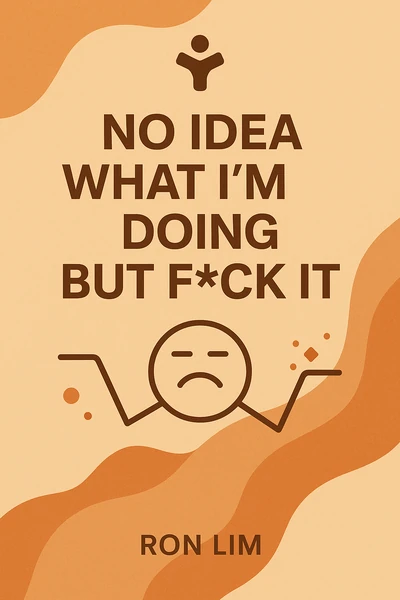
No Idea What I'm Doing But F*ck It
Ready to Take Action?
Get the Mentorist app and turn insights like these into daily habits.