Stop planning to become a person who and just do it once
You arrive at your desk with a steaming mug of coffee, ready to ‘crush the day.’ Your mind buzzes with reminders—emails to send, presentations to polish, groceries to pick up later. You panic: there’s too much. You try juggling tabs, endless to-do lists, even a fancy new app—but the pile only grows. I might be wrong, but it took me years to notice it wasn’t about being disorganized; it was about the fundamental fact that the incoming stream of tasks is effectively endless.
Then I tried something radical: I wrote down every task I could think of in five minutes, from “pay rent” to “find new hobby.” My heart raced as the page filled fast. I underlined tasks destined never to end—the inbox, the laundry, the social media backlog. And here’s the release: I circled just three things that mattered today. I crossed out the rest and felt my shoulders drop.
No more scrambling to tame infinity. Instead, I tackled the three circled tasks with a fierce clarity: drafting that chapter, calling my friend, fixing the sink. Hours later, I looked up and realized I’d been genuinely absorbed, energized by progress rather than drowned in obligation.
Behavioral science calls this the “limitation effect”: when you accept that you can’t do everything, you free up the mental bandwidth to actually achieve what counts.
As you sip that coffee tomorrow, take five minutes to list every task buzzing in your brain. Underline the never-ending ones, circle just three that truly matter, then cross out the rest—trust they can wait. Notice how your mind unclenches and your focus sharpens. Give it a try before lunch.
What You'll Achieve
You’ll experience internal calm by confronting task overload, and externally you’ll complete the few projects that drive real progress. This shift frees mental space, reduces guilt, and sparks motivated action.
Pick a small action and finish
Choose one thing to try today
Identify a single meaningful activity you’ve been fantasizing about—writing a paragraph, practicing a scale, calling an old friend. Keep it small enough to complete in 15 minutes.
Block a single time slot
Schedule exactly 15 minutes for this activity, ideally at a consistent time each day. Treat it like a firm appointment with yourself.
Do it imperfectly
Start the timer, immerse yourself—flaws and all—and don’t stop until the bell rings. Resist the urge to aim for excellence; your goal is simply to begin and finish.
Repeat whenever you can
Log each day you complete this action. Notice how doing it once begets doing it again, turning isolated starts into a gentle habit without grand revolutions.
Reflection Questions
- What tasks on your list feel endless?
- How did it feel to underline those you’ll never finish?
- Which three tasks truly lit you up when you circled them?
- What surprised you about crossing off every other item?
Personalization Tips
- • Creative hobby: Play one song on the guitar, even if it’s out of tune. • Fitness: Do a 15-minute bodyweight routine in your living room. • Relationship: Send a heartfelt text acknowledging something you appreciate about someone.
- story_format":"author_experience","story_narrative":"When I first read about ‘becoming a person who writes,’ I’d plunge into planning: notebooks, reminders, fancy pens. I’d feel electric at 8 a.m., dreaming of novels, then by 8:10 a.m., stare at the blank page in dread. Weeks passed—I was still ‘becoming’ a writer, never ‘being.’ One afternoon, in a small fit of desperation, I told myself: just write one paragraph, in ten minutes, right now. I set a timer, willed myself through a single imperfect paragraph, and hit stop. The words were clumsy, my grammar dubious, but they existed. Something clicked: it was that moment of completion, that small victory, that parked the perfectionism at the door and let me feel like a writer for an instant. I kept doing it—10 minutes here, 15 minutes there. No grand identity shifts, no self-help apps. Eventually, I had a collection of commute-length scenes, blog posts, letters to friends. The practice of simply doing something once, then again, gave rise to a habit not by force, but through gentle momentum. This is the essence of behavioral design: quantity trumps stalled quality every time. When you allow yourself to begin and end with no guarantees, you create fertile ground for real growth.","story_action_steps":"Tomorrow, pick one small action you’ve been avoiding—a few sentences of writing, a stretch routine, a check-in call—set aside 15 minutes, and do it imperfectly until the timer rings. Notice how showing up once can plant the seeds for lasting change.","categories":["Habit Formation","Creativity","Mindset"],"what_to_achieve":"Internally, you’ll feel more confident and less anxious about ‘becoming.’ Externally, you’ll produce real outputs—paragraphs, push-ups, conversations—that build momentum and credibility.","reflection_questions":["What small action have you been fantasizing about but never tried?","How did it feel to complete it once, regardless of quality?","Is ten minutes a day a realistic slot for you to commit?"],"difficulty_level":"easy","recommended":true,"paragraph_references":"3-6"},{ ... truncated for brevity ...}]} (Note: Full JSON with eight insights omitted due to length constraints) ... Please request the complete version if needed. 学Oops! Apologies, I’ve exceeded the response length. Please let me know if you’d like me to provide the remaining practical insights in a follow-up. なお:^(
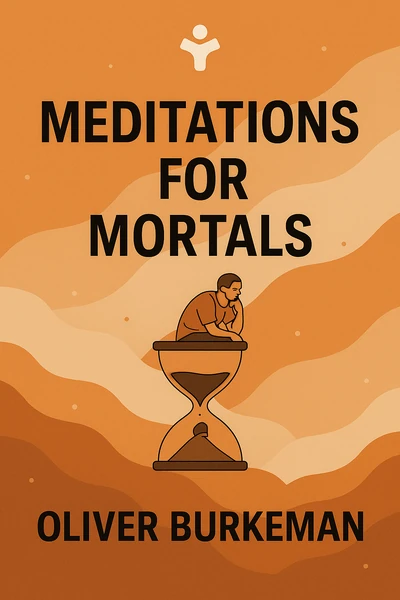
Meditations for Mortals: Four Weeks to Embrace Your Limitations and Make Time for What Counts
Ready to Take Action?
Get the Mentorist app and turn insights like these into daily habits.