Why Your Mind Moves on Before Your Heart Lets Go
You’ve just nailed a tough presentation—your mind declares victory. You leave the room thinking "That’s behind me," yet your chest still feels tight, like you’re holding your breath. That’s emotional lag time at work: the mind speeds on, but the heart hasn’t caught up. Imagine driving home and realizing your steering wheel grips tighter than usual. Your mind insists you’re calm, but your hands tell another story. Welcome to the gap, where healing begins.
Later that evening, you spot an old email thread pop up on your phone—instantly the same dull ache resurfaces. You think, "I’ve addressed this," yet your heart whispers, "Not yet." That whisper is a compass pointing you to unfinished business. By pausing and naming these pangs of doubt, you give yourself vital data: your heart’s still processing.
In the weeks that follow, you set mini-checkpoints—on your morning jog and midday coffee break—to ask, "How’s my heart doing?" Gradually, you see a pattern: certain triggers still hurt. Slowing down to honor those lags transforms them from roadblocks into guideposts. You begin to move in tandem: mind setting the path, heart keeping pace.
This dual-track approach is grounded in mind-body research showing emotional and cognitive systems often recalibrate at different speeds. When you respect both clocks, your self-compassion grows, and you free yourself to heal completely.
Next time you catch your thoughts rushing ahead of your feelings, pause—not out of duty, but to stay in sync with your heart. Breathe. Name the emotion. Whisper to yourself that this gap is normal, even essential for lasting recovery. Keep a small reminder on your phone or desk to ask, "How’s my heart?" This simple habit anchors your healing in both brain and heart. Give it a try tonight.
What You'll Achieve
You’ll cultivate balanced self-awareness by linking thoughts and feelings, reducing shame over lingering pain. You’ll make recovery smoother and more authentic, with fewer sudden setbacks and a clearer path to emotional freedom.
Honor Your Emotional Lag
Notice when mind races ahead
Throughout a day, catch moments when you think "I’m fine now" but still feel a twinge of hurt—maybe at breakfast or during a meeting. Jot down that gap for later reflection.
Acknowledge the lag gently
Each time you spot that mismatch, pause and say to yourself, “This is just my heart’s timing,” giving yourself permission to feel what lingers.
Build micro-pauses
Set three daily alarms labeled “Check in with your heart.” When one dings, stop for 30 seconds and name whatever you feel—anger, sadness, or simply emptiness.
Reflection Questions
- When did you last tell yourself “I’m over it” but still felt a twinge of hurt?
- What triggers cause your heart to lag behind your mind?
- How would honoring this lag change how you respond to stress tomorrow?
Personalization Tips
- After a project fails, you may refill your task list but still feel emptiness at dinner.
- You accept a friend’s apology, yet tears well when you hear their favorite song.
- You logically quit a habit for health but notice cravings flare in familiar places.
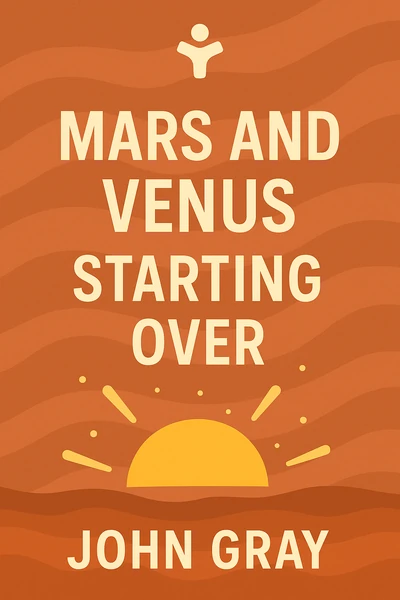
Mars and Venus Starting Over: A Practical Guide for Finding Love Again After a Painful Breakup, Divorce, or the Loss of a Loved One
Ready to Take Action?
Get the Mentorist app and turn insights like these into daily habits.