Start with one crisp win to prime your entire day
You wake up to the dusty blue light of morning and the distant hum of a bus outside. Before your brain has time to negotiate, your hands pull the sheet tight, fluff the pillow once, and smooth the blanket flat. It takes less than a minute, but the small click of completion changes the room’s tone. Coffee drips in the kitchen, and the tiny order on your bed quietly tells your mind, We’re moving.
Two weeks ago, mornings felt scattered. Phone first, then a scroll, then late emails. On Tuesday you forgot your keys. Thursday you skipped breakfast. But the day you started a two‑minute morning win, other choices got a fraction easier. A student I coach keeps a tally card on her nightstand. She jokes it’s her “anti‑snooze button.” She’s hit 13 days straight and says the bed looks like a small promise she kept—to herself.
I might be wrong, but it seems the magic isn’t in bedsheets. It’s in the binary: done or not done. Your brain loves clear closure because it releases a small pulse of dopamine, the neurotransmitter linked to motivation. That pulse then biases you toward the next task, like pouring water before opening notifications. A tiny identity starts forming: I’m someone who begins by finishing.
There’s science under the surface. Habit loops tie a cue to a routine and a reward, shrinking the need for willpower. Implementation intentions—“When I turn off my alarm, I make my bed”—pre‑decide behavior and cut decision fatigue. And success spirals show that frequent, low‑effort wins build self‑efficacy, which predicts persistence on harder goals. One crisp win won’t solve the day, but it primes your brain to treat challenges as the next rightful step.
Tomorrow, choose one tiny, binary task and anchor it to your wake‑up cue—when the alarm stops, make the bed or fill your water bottle. Say the reward out loud, something like, “First win done, momentum on,” and let yourself feel that quick surge. Mark a tally on a card by your nightstand, and aim for a simple seven‑day streak. Keep the task under two minutes so you never bargain with yourself. After a week, notice which next step became easier—then protect that morning win and build from it. Give it a try tonight.
What You'll Achieve
Internally, a calm sense of control and a credible identity as a finisher. Externally, consistent mornings, reduced decision fatigue, and a visible streak that nudges follow‑through on the next task.
Lock in a two-minute morning win
Pick one tiny, binary task for mornings
Choose a task that is clearly done or not done, like making your bed, filling a water bottle, or opening the blinds fully. The goal is a visible, no‑debate win that signals “I execute.”
Anchor it to an existing cue
Attach the task to something that already happens, like your alarm or brushing your teeth. This uses the habit loop—cue, routine, reward—to reduce decision friction.
Name the reward you’ll feel
Say out loud the benefit you’re chasing: “First win done, momentum on.” Labeling the reward teaches your brain to expect positive emotion after completion.
Track a seven‑day streak
Use a paper tally or phone habit app. Streaks gamify repetition and reduce the chance of skipping when motivation dips.
Reflection Questions
- What two‑minute task would signal “I execute” every morning?
- Which existing cue will you anchor it to so it requires no extra thought?
- How will you acknowledge the reward so your brain learns the pattern?
- What could break your streak, and what’s your plan to recover the next day?
Personalization Tips
- Work: Make your desk orderly in two minutes before opening email.
- Health: Lay out a glass and take your morning vitamins right after bedmaking.
- Parenting: Teach kids to do a “two‑minute tidy” before breakfast.
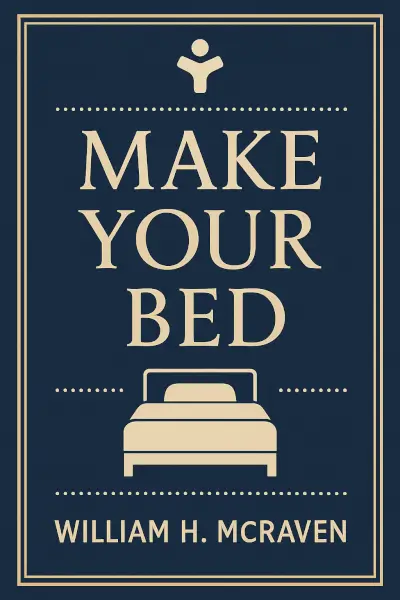
Make Your Bed: Little Things That Can Change Your Life...And Maybe the World
Ready to Take Action?
Get the Mentorist app and turn insights like these into daily habits.