Reconstruct Your Identity Beyond Old Narratives After Trauma
After a public family crisis, the author felt her life’s script crumble. The identity she’d built—daughter, church leader’s wife, community member—no longer fit. She stood at the bottom of an emotional chasm, untethered and exposed. In that darkness, she pulled out a notebook and wrote down every belief woven into her old self: ‘I am my father’s daughter,’ ‘I must never rock the boat.’
Each night she interviewed her future self: How did you reclaim your voice? Which stories did you set aside? The answers revealed a new narrative—one of courage, self‐sovereignty, and compassion. She paused at least twice a week for a resilience ritual, lighting a candle and walking in silence around the courtyard, reciting her new affirmations.
Psychologist James Marcia’s theory of identity reconstruction shows that this exploration—crisis plus commitment—leads to what he calls ‘identity achievement.’ It involves questioning old assumptions and embracing new values.
By excavating discarded beliefs and stepping into a consciously chosen story, she found stability in her independence. The bones of her old life were gone, but now she stood on a foundation she’d built herself, stone by stone.
This week, start by listing three beliefs you know you no longer want to carry—write them down and tear the paper up. Then take five minutes to imagine your future self and ask: ‘Which stories did I leave behind to thrive?’ Finally, invent a simple ritual—lighting a candle or a short walk—where you repeat your new narrative. Practicing this reconstructive ritual grounds your evolving identity in real moments, so you can begin tomorrow evening.
What You'll Achieve
You’ll release outdated self‐stories (internal) and step into a self‐defined identity that guides clear decisions and authentic expression (external).
Excavate and reframe your core story
List the beliefs you’ve outgrown
Write down identity claims—‘I must be perfect,’ ‘I belong here only if…’—that no longer serve you. Seeing them makes them easier to release.
Interview your future self
Describe where you want to be in a year. Ask, ‘What beliefs did I let go of to get here?’ Let that guide your next steps.
Create a resilience ritual
Design a weekly practice—writing, walking, prayer—where you honor your new self. This grounds your evolving identity in action.
Reflection Questions
- What beliefs have you inherited that no longer serve you?
- Who do you imagine becoming in one year, and what supports that vision?
- How can a simple weekly ritual reinforce your new narrative?
- What story will you refuse to tell yourself anymore?
Personalization Tips
- After a painful breakup, list the relationship stories you got stuck in and describe how you’d rewrite them as a more empowered self.
- When changing careers, interview your future‐self as a successful professional and note which self‐criticisms you’d need to drop.
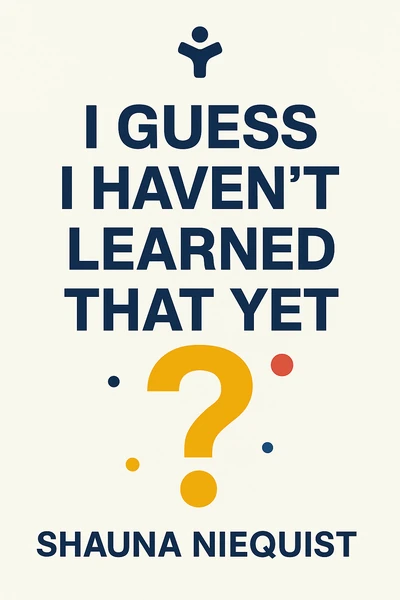
I Guess I Haven't Learned That Yet: Discovering New Ways of Living When the Old Ways Stop Working
Ready to Take Action?
Get the Mentorist app and turn insights like these into daily habits.